
ERZURUM, TÜRKİYE. The mountains came first. Before anyone had descended from the vehicles, before the first handshakes with the officials waiting in their good coats, the Palandöken range was already there. White-peaked, enormous, indifferent. Making everything else feel appropriately small.
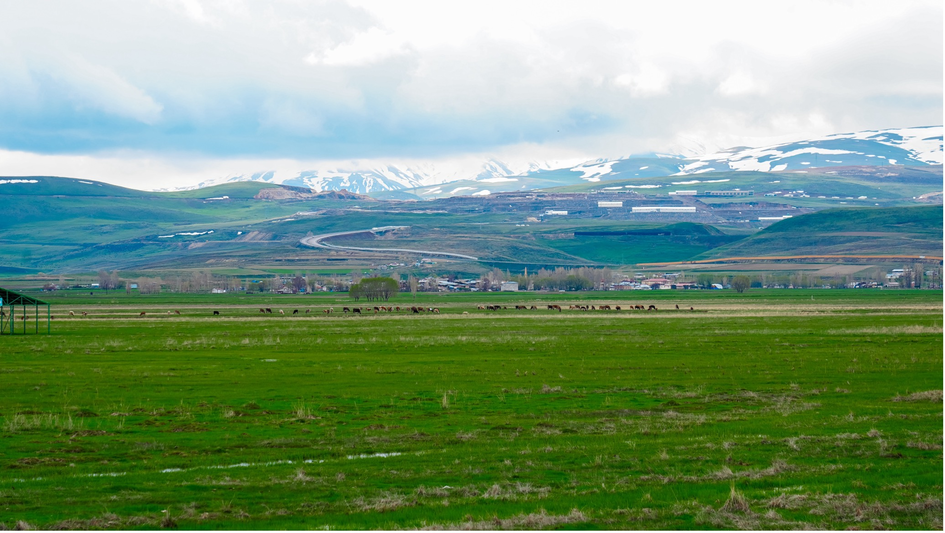
On 6 May, the Silk Road Caravan officially departed from Erzurum, launching a transcontinental journey through countries from the steppes of Anatolia to the grasslands of Mongolia. For centuries, caravans travelling along the Silk Road carried not only goods, but also ideas, cultures and knowledge between civilizations across the vast rangelands of Eurasia. Today, the Silk Road Caravan revives that spirit of exchange and connectivity while drawing attention to the importance of restoring and protecting these landscapes and the communities that depend on them. Organized by the United Nations Convention to Combat Desertification, the caravan will arrive in Ulaanbaatar in August 2026 for COP17. It travels in a year of particular significance: 2026 is the International Year of Rangelands and Pastoralists, a designation that places at the center of global attention the landscapes that cover more than half the Earth’s land surface, and the communities that have tended them for generations.
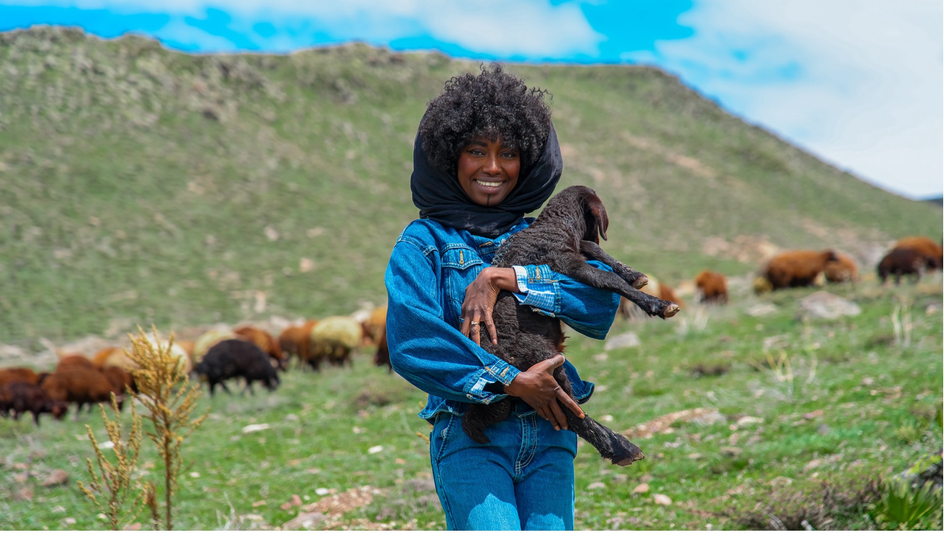
The rangelands of Eurasia sustain two billion people. Stretching more than 8,000 kilometres from the Black Sea to the Mongolian Plateau, the Eurasian steppes form the world’s largest contiguous grazing landscape and comprise roughly a quarter of global rangelands.They are carbon sinks, water regulators, the living skin of entire continents. They are also, by most measures, among the least visible landscapes in global policy conversations. They don’t photograph as dramatically as forests burning or glaciers calving. Their degradation is slow, quiet, cumulative, often described as a “silent demise.”
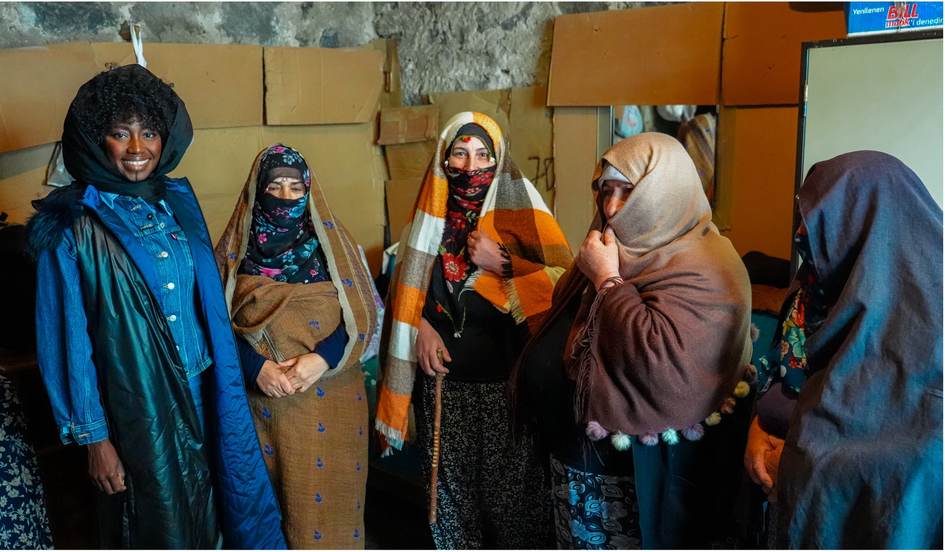
Each miles the caravan travels, each story it records, serves a single purpose: to ensure that by the time the caravan reaches Mongolia, the voices of rangeland-dependent communities are heard at the tables where decisions about their futures get made. The herders of Kazakhstan and the pastoralists of Kyrgyzstan. The shepherds of Anatolia and the nomadic families of the Mongolian steppe. People whose relationship with the land is a way of life, passed down across generations with the same care and precision as a language.
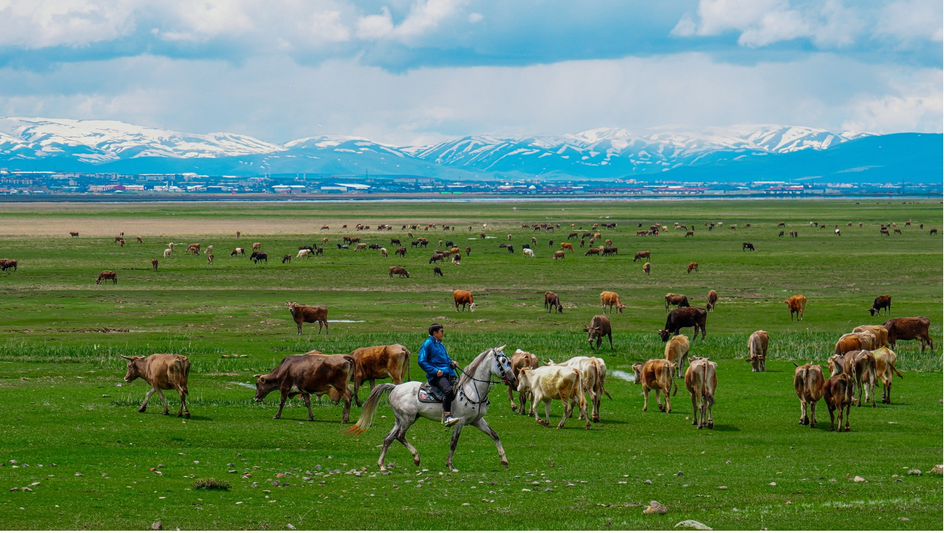
The first stop was the village of Güzelova, a cluster of stone houses set into a hillside above a wide green basin east of Erzurum. The morning the delegation from different part of thew world arrived, the cattle were already moving. A slow dark river of animals flowing out from the village toward the upper pastures, shepherded by figures bundled against the cold.
Mehmed, one of the local pastoralists, watched this with the expression of a man watching something he has seen a thousand times and still finds worth watching. Every morning the animals gather. Every evening they return. The milk and the cheese are produced by women, and we are introduced to Halima and other women who are leading on that. The grass gets grazed and recovers, the soil holds. It has worked this way for longer than anyone in the village can remember, and Mehmed speaks about it the way people speak about breathing. Not with pride exactly, but with the particular calm of someone doing the thing they were made to do.
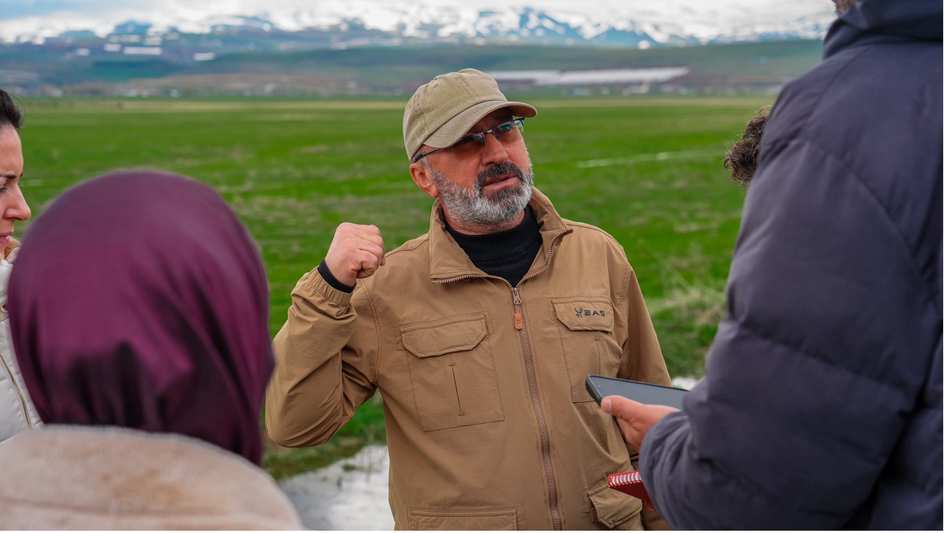
“Rangelands are not just grazing areas. They are a way of life. People are born there, they live there they fall in love there, they die there.”
Dr. Mustafa Uzun, Eastern Anatolia Agricultural Research Institute
He said this standing in a field, mud on his boots, and the sentence landed without needing elaboration.
Türkiye’s rangelands cover 14.6 million hectares, nearly a fifth of the country’s total territory. They regulate water, store carbon, hold the soil in place against wind and rain. They also hold something harder to measure centuries of accumulated knowledge about how to live within a landscape rather than against it. That knowledge is what industrial agriculture cannot replicate and what climate models cannot yet account for. It lives in the hands of people like Halima, and it is disappearing faster than anyone is counting.
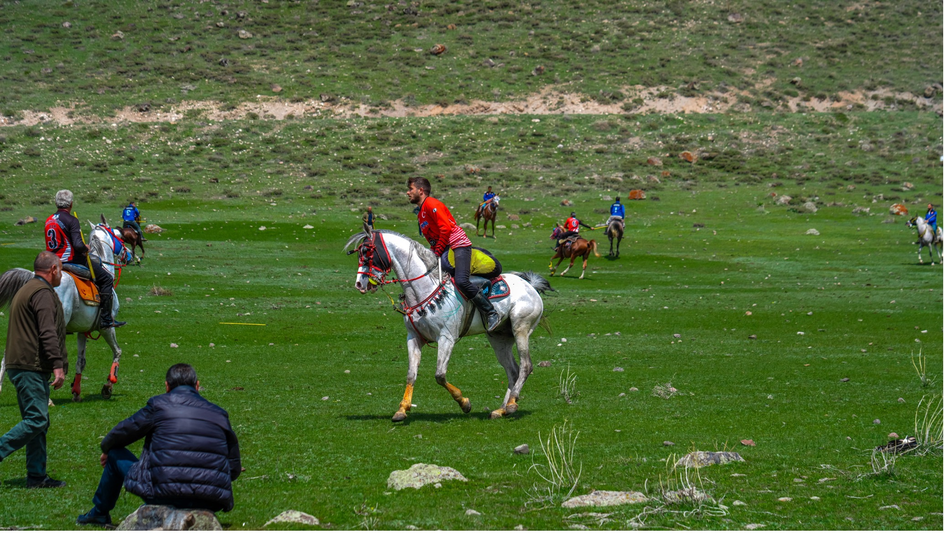
The late morning brought cirit. A traditional equestrian sport with roots in the 11th century, two teams on horseback, a wooden javelin, a field wide enough to get properly lost in at full gallop. Horses moved hard across the ground, riders leaning out of their saddles to throw and dodge, dust rising in long plumes behind them.
Murat, one of the riders, brought his horse to a stop near the delegation after a run. Breathing hard, looking out at the field. “When we play,” he said, “we feel connected to our history and our ancestors.” He said it the way you say something true. Not performing it, just reporting it.
The delegation watched from the sidelines. Mongolian herding experts next to Tunisian pastoralist, next to Ibrahim who travel all the way to the regions close to the lac Chad, alongside the local communities. Nobody shared a language. Somebody produced tea. The horses kept running. What emerged over that afternoon was unscripted but the challenges facing rangelands are global, but so is the knowledge of those who have spent their lives on them.
From Erzurum the caravan moves now toward Malatya, Gaziantep, and Antalya before the long push east into Central Asia, Kazakhstan, Kyrgyzstan, China, Mongolia. By August the delegation arrives in Ulaanbaatar.
Mehmed will still be in Güzelova. The cattle will still be moving out in the morning and returning at dusk. The grass will still be growing, or not, depending on the rain. The knowledge will still be there, held by the people who inherited it.
The question the caravan carries all the way to Mongolia is not new. It is, in fact, very old. What do we owe to the land, and to the people who never stopped taking care of it?