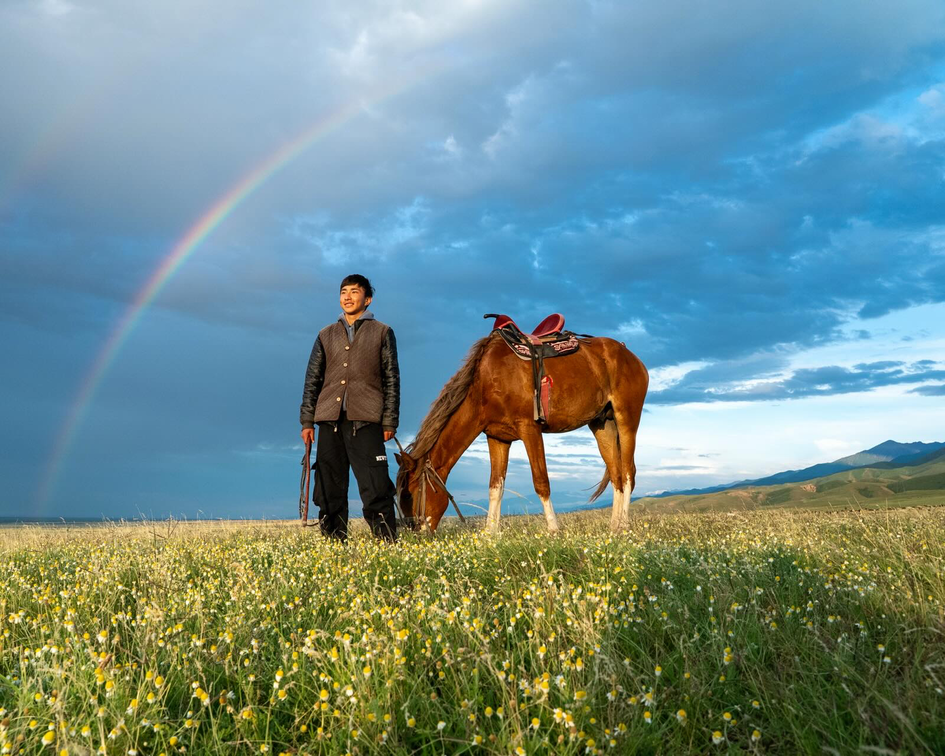
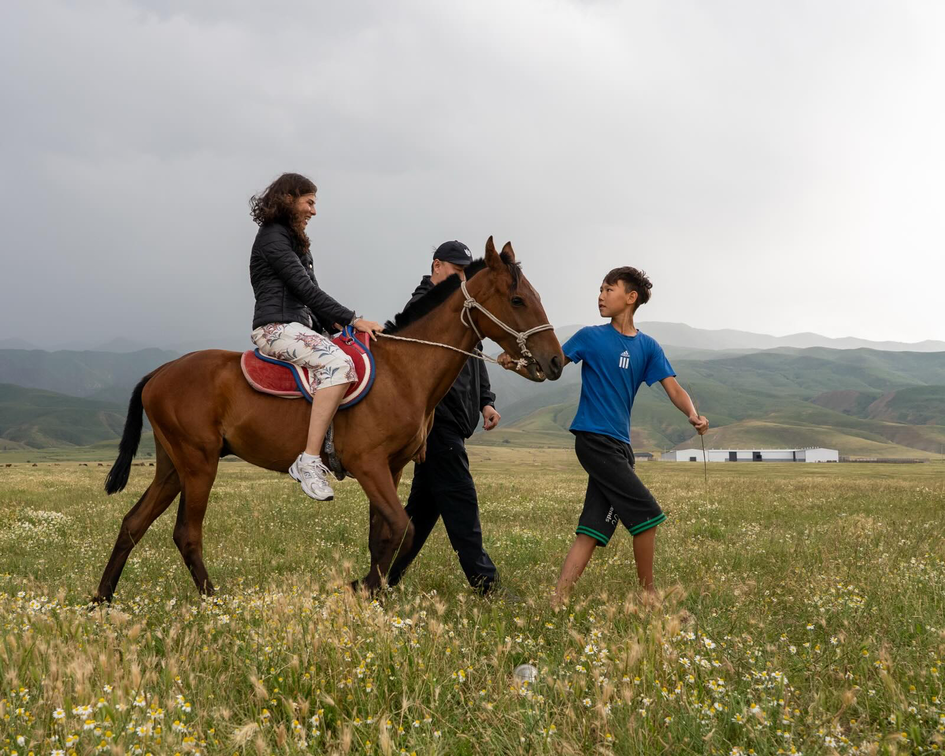
A young Kazakh herder with his horse beneath a rainbow-filled summer sky is becoming one of the most enduring images of the Silk Road Caravan in Central Asia. Beyond its appeal on social media, it seems to have captured something essential about the Caravan’s journey: the vast steppe that invites movement, the dramatic weather that brings welcome change and the centuries-old relationship between people, animals and land.
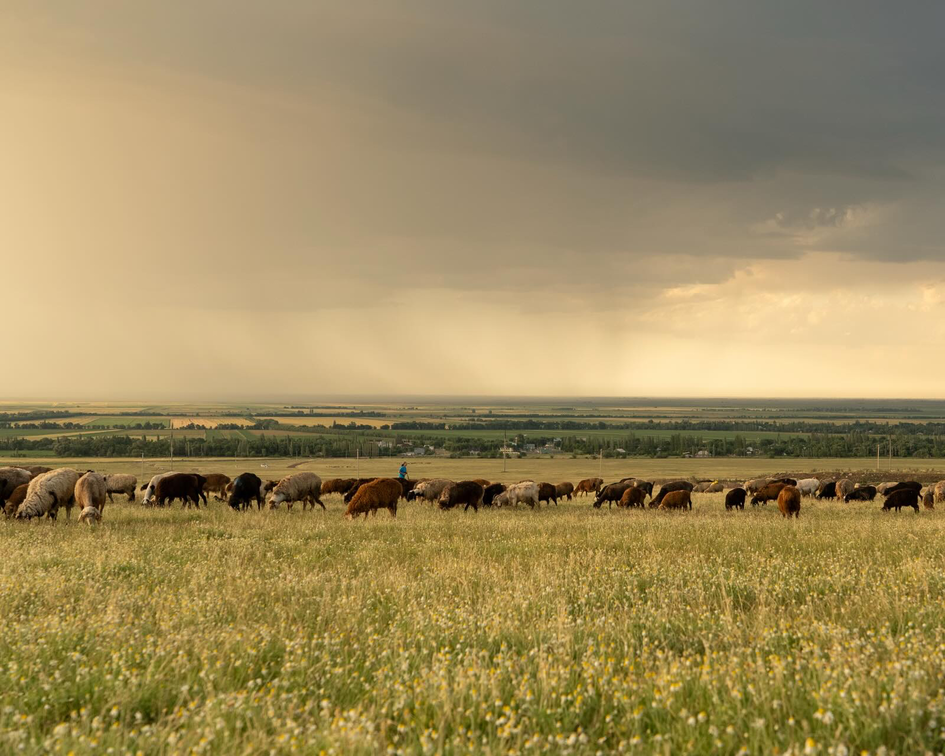
The journey comes at a critical time— according to UN data, over 20 per cent of the total land area in Central Asia is degraded, equivalent to roughly 80 million hectares. This affects an estimated 30 per cent of the region’s combined population.
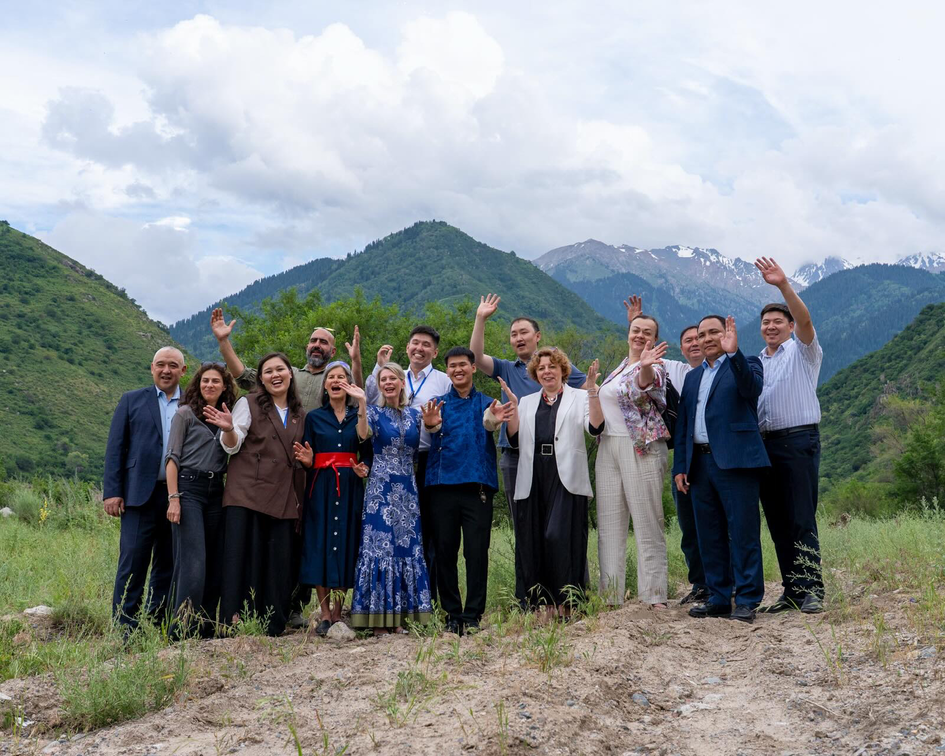
Across Kazakhstan, land is approached as inheritance and working system at once: mountain reserves, ancient trade routes, family enterprises and digital info-hubs. As the Silk Road Caravan travelled through the country in June 2026, it witnessed that caring for the land is not a single practice or a scientific discipline. It is a way of connecting what people know, what institutions measure and what the land itself can welcome.
This national perspective was clear from the opening of the Kazakhstan stage. Daulet Bizhanov, Deputy Chairman of the Committee for Land Resources Management under the Ministry of Agriculture of the Republic of Kazakhstan, placed modern land monitoring systems at the center of the country’s agenda. “Today, digitalization has become one of the key conditions for sustainable land management,” he told participants, pointing to the role of new technologies in identifying early signs of degradation, monitoring pasture conditions and supporting more effective decisions on land use.
Aksu-Zhabagly: where wild tulips reach the horizon
In Aksu-Zhabagly, the Caravan entered one of Kazakhstan’s oldest nature reserves. Established in 1926, it is Kazakhstan’s first protected area, a place where mountains, migration corridors and local livelihoods coexist.
Participants learned about core and buffer zones, scientific monitoring and cooperation with specialists who study and ring birds moving along migration routes between the Talas Alatau and Karatau ranges. The reserve protects a landscape of rare species and fragile habitats, where every decision about access matters. These healthy mountain ecosystems also help regulate water, support biodiversity and strengthen the resilience of surrounding landscapes and communities.

The wild tulips that bloom here in spring — scarlet as far as the eye can see — are part of southern Kazakhstan’s botanical pride. Local guides like to tell visitors that tulip bulbs once traveled westward along old trade routes, eventually becoming part of the European tulip mania. Whether history or legend, the story feels at home here: these flowers are rooted in the region’s natural heritage and their spring bloom is one of the reasons this landscape needs stewardship and care.
The Caravan participants reflected on how visitors can be invited into unique places of natural beauty without weakening the protection that preserves them. Tourism can bring income, but only if access, education and local benefits are planned with care. Conservation is about balancing access to natural areas and contributing to local livelihoods without compromising the very landscapes that attract us in the first place.
Taraz: the memory of silk
Taraz gave the Kazakhstan stage another strong Silk Road anchor: a city where ancient trades are not only remembered but are being brought back into life.
On the Talas River, within the wider Chu–Talas cultural and agricultural landscape, the city grew where water made settlement, farming, pastures and trade possible. Its place on the northern branch of the Silk Road turned this landscape into a meeting point for merchants, craftspeople and travelers, forging the mastery of pottery, metalwork, glass, paper, silk and felt.
Today, local women artisans are going back to Taraz’s roots to revive silk production, restoring old mulberry gardens that survived from earlier times. Felt-making also remains part of the city’s craft identity, linking wool production, pastoral life and local skills, gaining international recognition, as Taraz has been included in the World List of Craft Cities.
Taraz is the living proof that knowledge can always be found in a landscape that brought it to life centuries ago, returning through people — in mulberry gardens revived, tools rediscovered and hands that relearn how to spin, shape and weave.
Almaty: land memory in the digital age
In Almaty, the Caravan moved from fields and farms into the institutions that make potential land issues visible even before degradation can be seen from the roadside.
At RSE “GIPROZem,” the State Institute for Land Survey Works, specialists showed how Kazakhstan studies its land through soil, geobotanical, agrochemical and land-monitoring surveys. Their work covers arable land, pastures and hayfields, assessing soil quality, vegetation, erosion, salinization and carrying capacity, then turning field observations into maps and recommendations.
It is patient technical work, but it forms the basis of land protection. Before land can be restored or managed, it has to be understood: what grows where, what the soil can support, where fertility is declining and where risks are beginning to emerge.
The next layer came through RSE “GISKHAGI,” whose history reaches back to 1936 and whose archives still hold decades of aerial survey material. Today, its work is increasingly digital. Using GPS surveys, aerospace imagery and geoinformation systems, GISKHAGI creates digital agricultural maps that bring together boundaries, infrastructure, water systems and land-use data.
These maps support land allocation, audits, cadastre work, valuation and control over land use and protection. The presentation also pointed toward newer tools: digital land passports, geoportals, artificial intelligence, yield forecasts and early identification of degradation risks.
Together, GIPROZem and GISKHAGI shared with the Caravan the modern architecture of sustainable land management: soil pits and herbarium collections on one side, digital twins and artificial intelligence on the other. For the UNCCD, this part of the Kazakhstan stage was especially important because it showed the practical foundation of evidence-based land management.
This is also where national systems connect with the scientific approaches promoted under the Convention, including the Land Degradation Neutrality framework, the use of land cover, land productivity and soil organic carbon as core indicators and the integration of national data, Earth observation and local knowledge.
Kurty: the milk road caravan
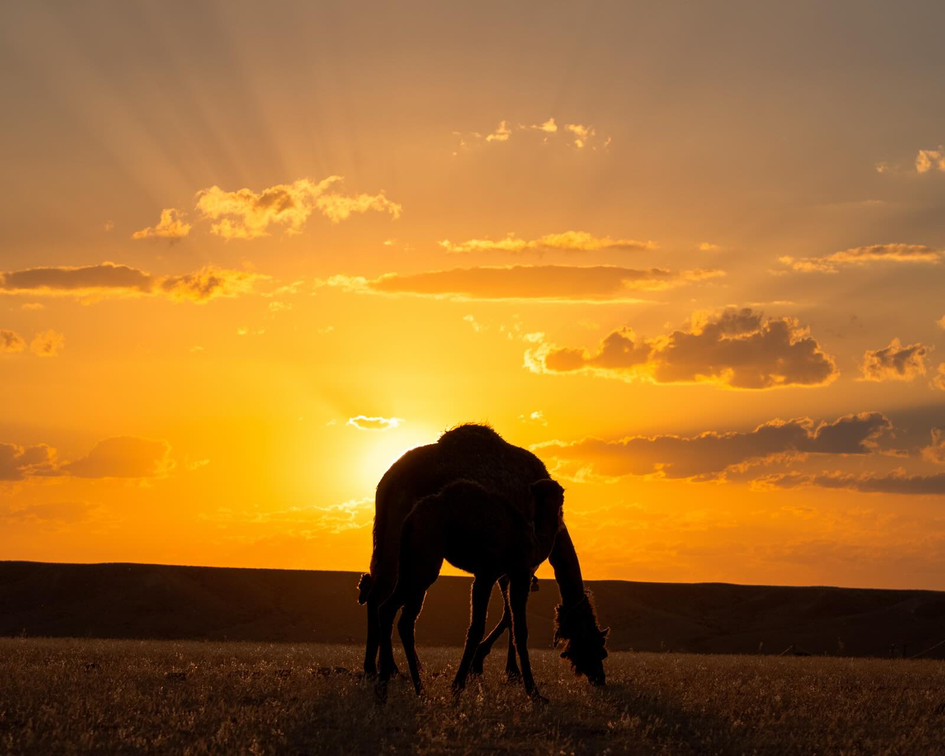
Near the village of Kurty, east of Almaty, the Caravan visited one of Kazakhstan’s largest camel farms, home to around 650 camels grazing across the surrounding rangelands.
The farm combines traditional pastoral practices with modern dairy production. Non-lactating camels spend most of their time on natural pasture, while milking camels are kept in large enclosures, where they are fed and milked twice a day.
Camel milk is the farm’s main product. Each camel produces around 10 litres of milk per day, which is processed into dairy products sold across the region. The farm employs around 90 people and has grown steadily over the past decade, reflecting the increasing popularity of camel milk and traditional dairy products among consumers in Kazakhstan.
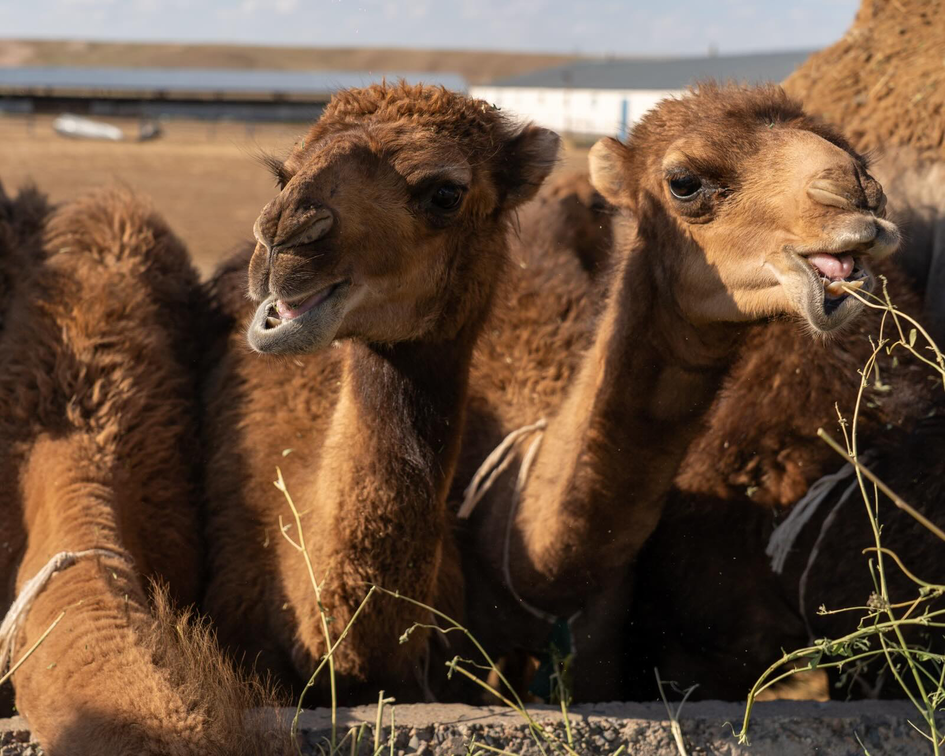
Farm manager Baurzhan Bekbauliev, who has worked at the farm for ten years, explained how the operation follows seasonal grazing patterns, with different groups of animals moved between pastures throughout the year. Camels are well adapted to the harsh conditions of the region, relying on native vegetation and travelling long distances across the rangelands.
Like the vast steppes of Kazakhstan, rangelands cover more than half of the Earth's land surface and are home to communities whose lives have been shaped by them for generations. Here, those traditions continue to evolve, blending age-old pastoral knowledge with modern food production.
The visit offered a reminder that pastoralism remains a living tradition—one that continues to support livelihoods, food production and a deep connection to the land.
Near Almaty: greening cities from local roots
Near Almaty, Zarina Samigulina showed the Caravan another form of land-based leadership: green, local and led by women.
A native of Almaty, she chairs the Central Asian Association of Plant Nurseries. Her work answers a practical need: Kazakhstan requires more of its own planting material for cities, parks and public spaces. Imported plants are expensive and not always suited to local heat, dry spells and urban stress. Producing locally means growing plants that are better adapted to Kazakhstan’s climate while reducing dependence on imported stock.
The nursery now supplies a wide range of plants for urban greening, parks, airports, residential areas and public spaces. It creates jobs for local people, brings in seasonal workers and supports professional training. Samigulina also co-founded SheCommunity, a women’s business network that supports entrepreneurs, including through training in the regions.
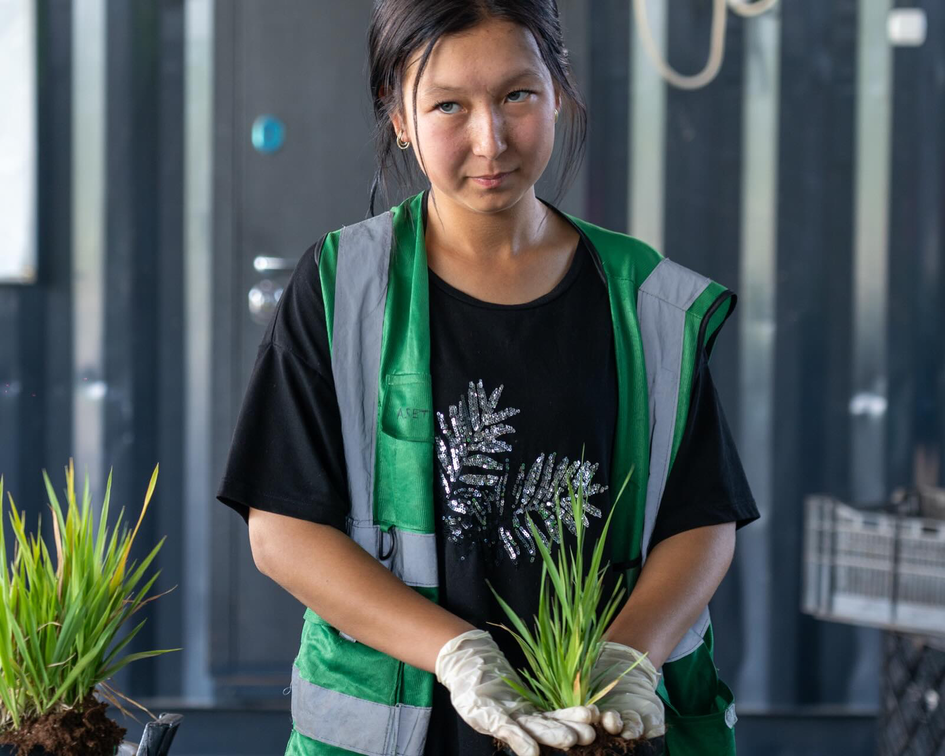
Here, sustainable land management appeared not as a remote policy term, but as local skills, jobs, women’s leadership and the practical work of making cities greener. It also showed how climate adaptation enters everyday life: through plant choice, nursery practice, professional networks and people who know which species can survive in changing conditions.
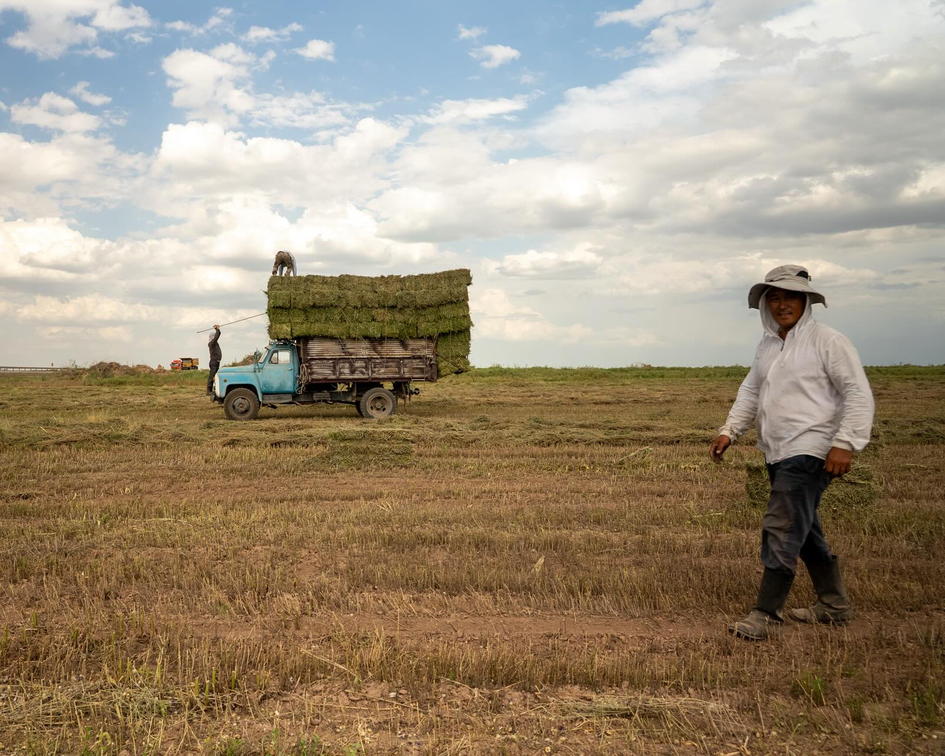
Across these stops, Kazakhstan showed the Caravan that good land stewardship is pieced together from many kinds of work: protecting mountain corridors, reviving crafts in ancient cities, turning abandoned plots into places of livelihood, translating soil profiles and aerial photographs into digital maps, keeping camel pastoralism productive and adapting plants for hotter cities.
The examples differ in scale, but they point in the same direction. Sustainable land management is not only a policy goal or a scientific method — it is also local initiative, cherished skill, institutional memory, technical capacity and the everyday decision to keep land productive, healthy, resilient and alive for those who depend on it.
“What stood out to me was the government’s mindset,” said Caravan participant from Iran Maedeh Salimi, programme director and board member at the Centre for Sustainable Development and Environment. “Climate change, resilience and sustainable land management were clearly part of the national conversation. We saw some of this starting to take shape in practice, and I hope to see more of these ideas implemented on the ground.”
When the Caravan moved on from Kazakhstan toward Kyrgyzstan, the rainbow over the June pasture felt like a good omen for the road ahead — a clear sense of the land’s potential when its guardians are recognized, supported and encouraged to lead.