The Silk Road Caravan arrived in China in July, carrying a question that had travelled across rangelands from one country to another: how can land be restored while the people who depend on it build secure and sustainable livelihoods?
Across Inner Mongolia, the Caravan would explore different answers: willow barriers holding back shifting sands, herders adapting traditional practices and family businesses finding new markets for pastoral products. For participants from different countries, the journey offered a chance to exchange experiences and consider what lessons might travel beyond China's grasslands.
Hohhot: A conversation on the future of rangelands
The journey began in Hohhot, with a conference marking the International Year of Rangelands and Pastoralists 2026, placing rangelands at the center of a global conversation. Rangelands cover around 54 per cent of the world’s land surface and support the livelihoods of some two billion people, yet their contribution is often underrecognized in policy and investment decisions.

Hindou Oumarou Ibrahim, President of the Association of Indigenous Women and Peoples of Chad, brought the perspective of pastoral communities, while representatives of Food and Agriculture Organization of the United Nations (FAO) and Chinese experts shared experiences in rangeland conservation and sustainable management.. From the Sahel to the Asian steppes, where millions of people rely on pastoralism, the discussion returned to a common challenge: how to ensure that rangelands remain productive and resilient while sustainingthe communities that depend on them.
The conversation then moved from global recognition to practical cooperation. The establishment of the Business for Land China Hub created a new channel for Chinese businesses to engage with the UNCCD and contribute to land restoration, while discussions on China’s experience in combating desertification and land degradation explored the policies, investments and approaches used, as well as the challenges of sustaining restoration over time.
China has nearly 267 million hectares of grasslands stretching across its vast territory, while around 180 million hectares are classified as healthy or sub-healthy. Managing landscapes on this scale also raises questions about grazing pressure, land degradation and how to balance conservation with the needs of pastoral communities.
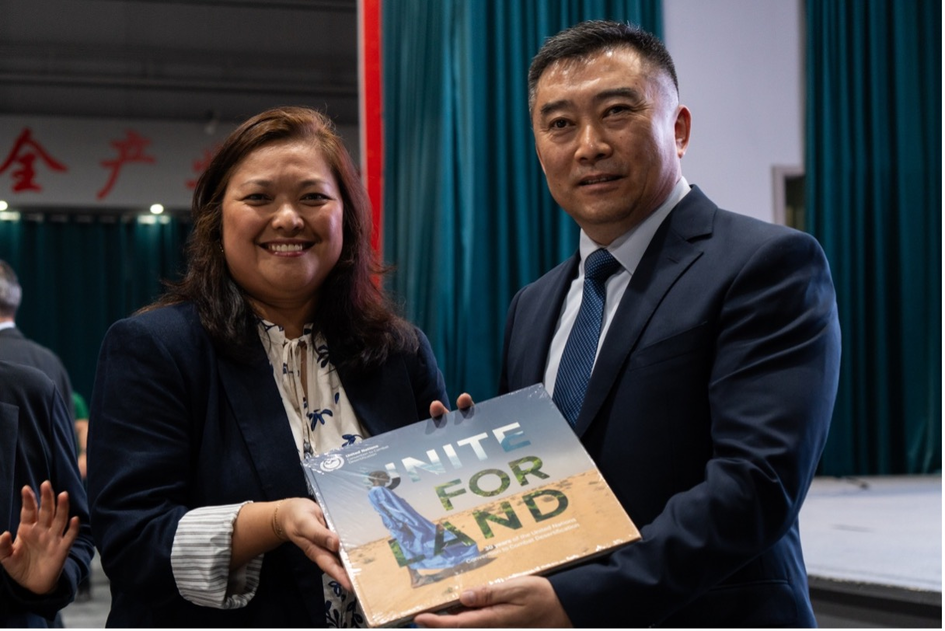
The Hohhot meeting set the tone for the journey ahead: a chance to see how restoration works beyond conference rooms, on the land itself and in the lives of the people who depend on it.. As Long Ruijun, a professor at Lanzhou University, said, "Grasslands are not merely magnificent natural landscapes, they are living communities that sustain ecological security, pastoral livelihoods and cultural diversity."
From Hohhot, the Caravan travelled east towards the Hunshandake Sandy Land, where the conversation about the future of rangelands became visible on the ground.
Hunshandake sandy land: Bringing grasslands back to life
Winds howl across the Hunshandake Sandy Land, 180 km north of Beijing. Two decades ago, they fueled dust storms across northern China. Today, they raise waves of green grass. The wind has not changed; the land has.
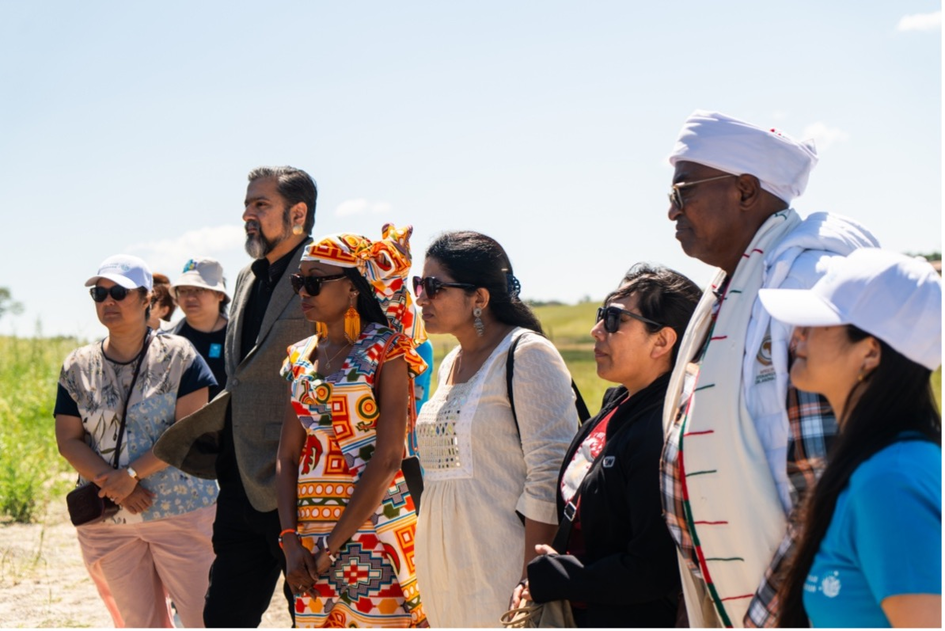
Representatives from UNCCD and organizations in India, Peru, Kenya and Chad visited the site in China's Inner Mongolia Autonomous Region to learn about an innovative method combining willow barriers with mixed seeding. The approach is adapted to the local climate, soil and ecological conditions. Local practitioners use branches of a native willow shrub to form sand barriers that slow the movement of sand. Native grasses sown during the rainy season grow and spread in the grids. Together, the shrubs and grasses foster a layered plant community that stabilizes the sandy land and supports the recovery of vegetation. Officials described the method as inexpensive and sustainable. The willow shrubs can also be periodically pruned and used as livestock fodder. After a five-year grazing ban, the restored grassland can be put into controlled use.
For visiting participants, the approach also raised questions about how similar techniques might work in other landscapes, particularly where communities depend on grazing land for their livelihoods.
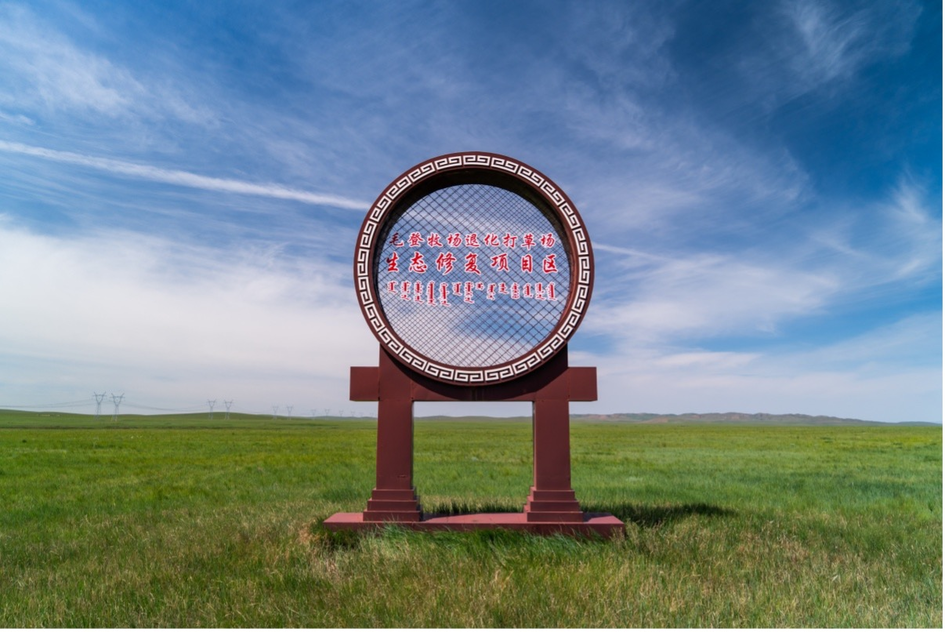
Another example is Maodeng Pasture Ecological Park, where conservation-oriented management restricts human and livestock activity while supporting the development of the forage industry. It has become a forage production base and an emergency forage reserve in Xilinhot City, with the aim of strengthening forage supplies and helping stabilize prices..
But planting was only the visible part of the story. Caravan participants wanted to know what came next. Their questions went beyond the techniques themselves: How much does the project cost? Could herders take part? Who will maintain the restored land? Can the approach remain sustainable during harsh years, when rain is scarce and pastoral livelihoods still depend on livestock?
These questions are familiar to countries confronting desertification, land degradation and drought. For UNCCD, exchanges such as the Caravan offer an opportunity to explore not only what works, but under which conditions, at what cost and with what benefits for local communities.
Learning from pastoralists: Life on the grasslands
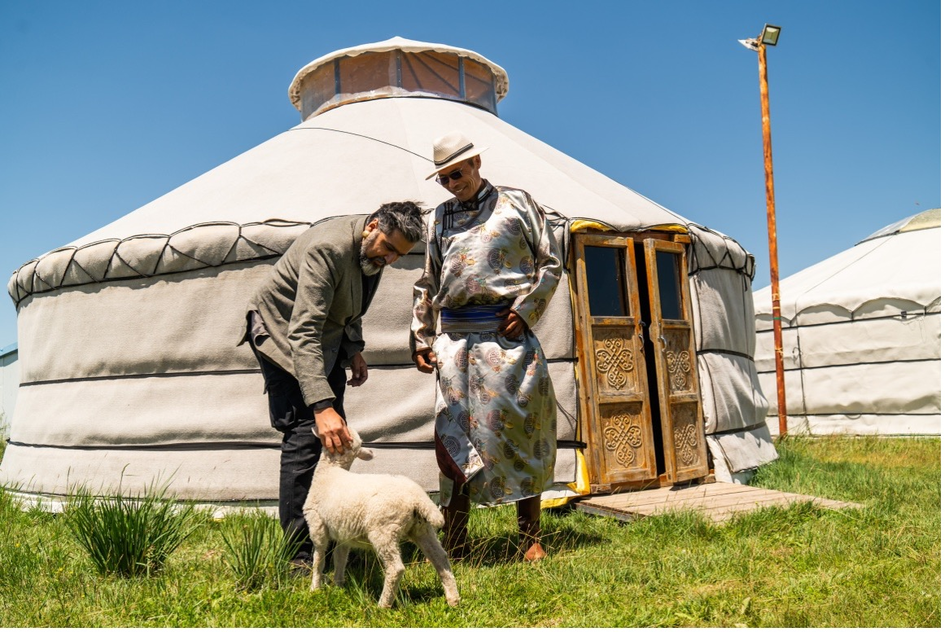
Leaving the restoration sites behind, the Caravan continued to local ranches, where the health of the land is closely tied to the health of livestock, the choices of herders and the livelihoods of their families.
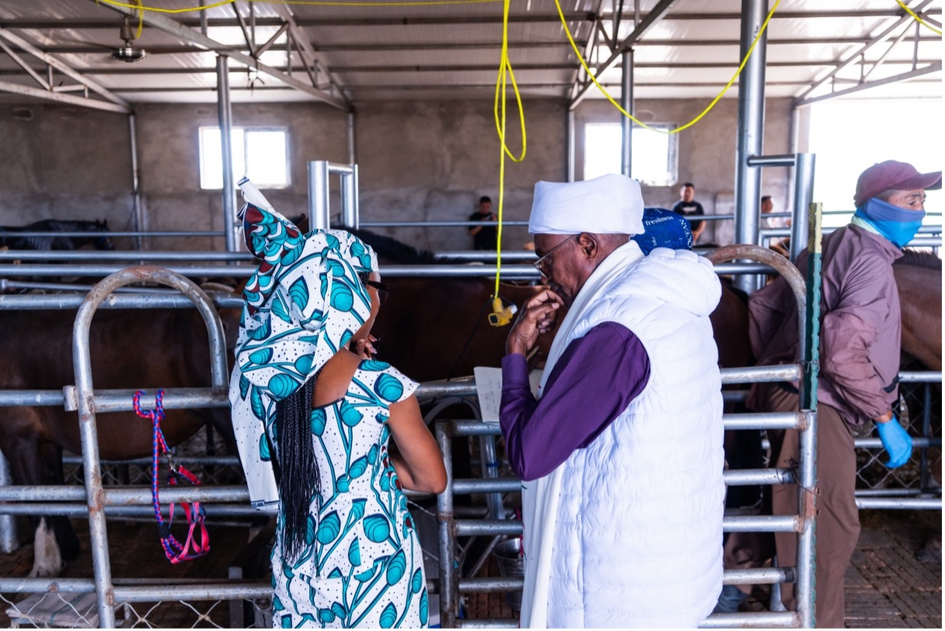
Hasbaatar, 67, established the Engel Modu Family Ranch in 2015, managing 166 hectares of his own grassland and another 300 hectares of leased land. The ranch keeps around 90 head of cattle, more than 90 per cent of them third-generation Simmental crossbreeds. “We’re not trying to raise more cattle. We’re trying to raise better cattle,” he said. Producing fodder locally is part of his approach to managing grazing pressure while improving livestock production.
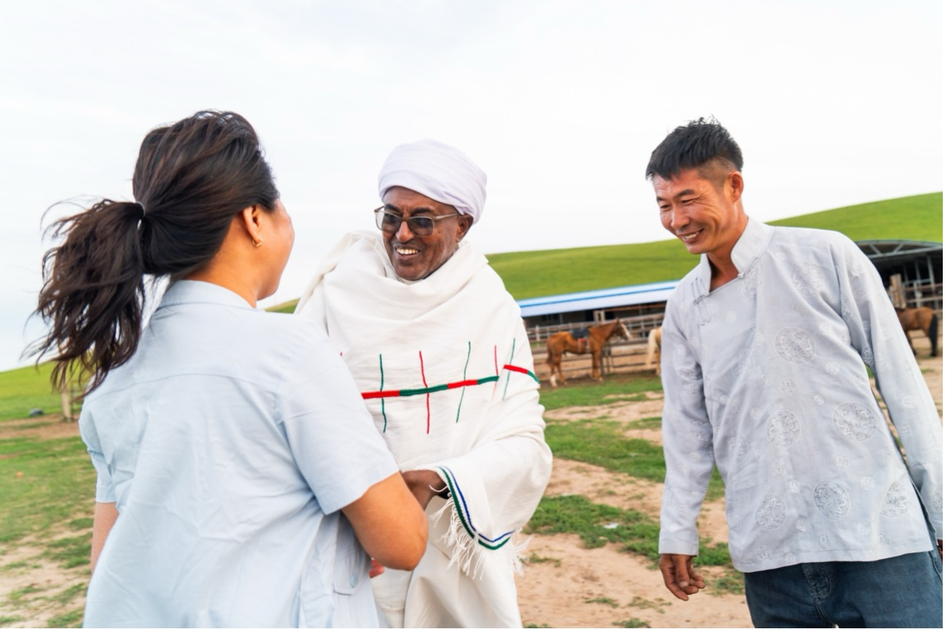
For Saihenqimuge, 39, the future of her family's ranch is not only about livestock. The Mongolian herder raises raises 160 Ujimqin sheep and 62 horses, including around 50 mares that are milked during the summer. In 2024, her family expanded into homestay tourism, combining mare’s milk wellness, horse riding and horse-culture experiences. For her family, tourism and dairy production offer ways to diversify income beyond livestock breeding She also operates the Muxile Dairy Products Store, whose dairy products are sold in Hohhot, Hulunbuir, Beijing and other places.
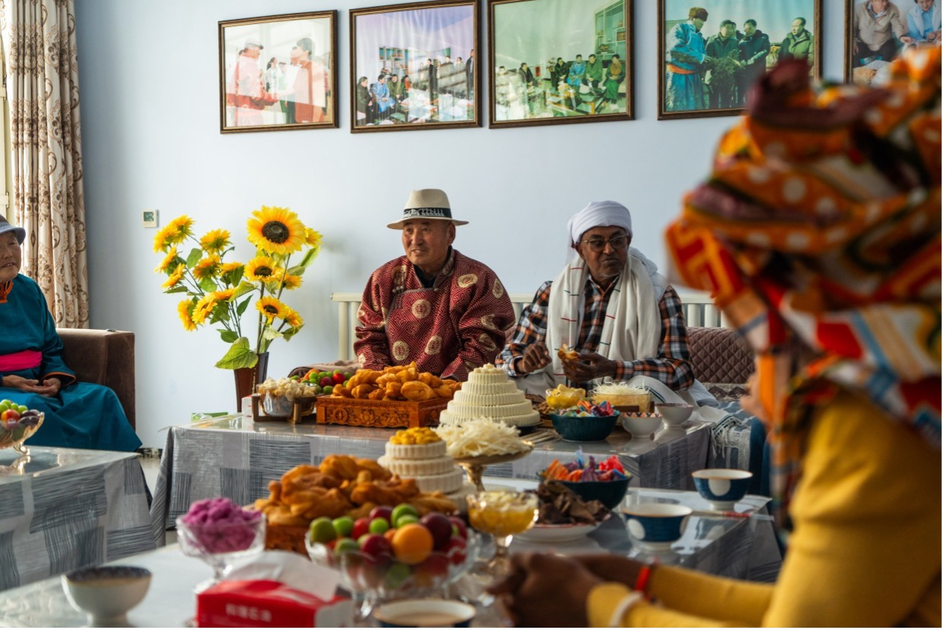
The Caravan also visited the Agula Family Ranch in Baiyinkulun Pasture, Xilinhot City, founded by Agula in 2018. The ranch combines horse breeding with the production and sale of koumiss, a traditional fermented mare’s milk. Agula has established a long-term partnership with Xilingol League Mongolian Medical Hospital, supplying koumiss for its koumiss therapy programme. The family also runs a homestay, where visitors can experience horse riding, koumiss and aspects of nomadic grassland life.
For Hindou Oumarou Ibrahim, the visits reinforced the importance of placing pastoral communities at the centre of restoration efforts.
“What we have seen in Inner Mongolia is a powerful reminder that restoring nature and improving livelihoods are not competing goals. They are deeply interconnected.” She also highlighted the role of local communities in making restoration last: "One of the most important lessons is that restoration succeeds when local communities are at the center," Ibrahim said. "By combining traditional knowledge with science, investing in nature-based solutions, and creating sustainable sources of income, restoration becomes both environmentally effective and economically viable."
From pastoral tradition to modern taste: The cheese of Xilinhot
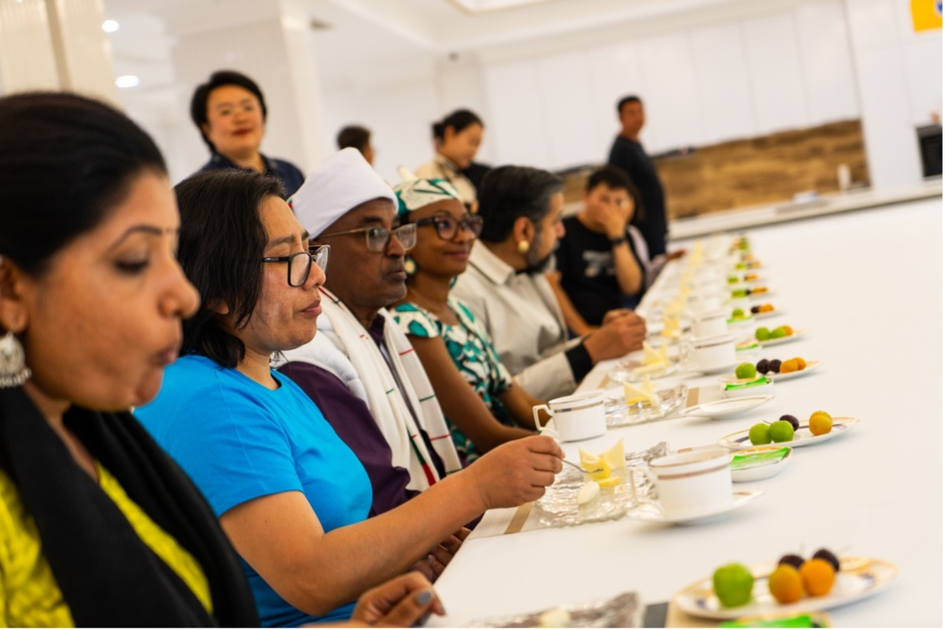
At the Shoufang Xilingol Cheese Cultural Industrial Park, the Caravan entered a different kind of landscape – one shaped by milk, craftsmanship and the dairy traditions of Xilinhot, now finding a place in modern food production.
Established in 2021 as the first cheese-themed park in Xilin Gol League, the park has developed a model linking around 400 dairy households with processing and wider markets through a “company + milk station + herder household” structure. More than 500 people are employed, annual output exceeds 100 million yuan and the park processes more than 800 tons of fresh milk each year into more than 20 types of products, including milk skin and milk tofu.
Inside the park, the blend of tradition and modern production can be seen in the way cheese-making is both presented and practised. Seasonal exhibitions recreate scenes of pastoral life and cheese production, from milking and fermentation to drying, while a viewing corridor allows visitors to see modern processing alongside traditional techniques. Visitors can also make traditional dried milk curd themselves, turning an everyday pastoral skill into an experience that can be shared with a wider public. By 2025, the park had welcomed more than 70,000 visitors and generated more than 70 million yuan in revenue. Beyond the production figures and visitor numbers, the park offered the Caravan another perspective on pastoral livelihoods: how traditional products can reach wider markets and the importance of ensuring that herder households benefit from the value they create.
Lessons along the Silk Road
From the restored grasslands of Hunshandake to the ranches and dairy workshops of Xilinhot, the Caravan encountered different ways of managing land and sustaining pastoral livelihoods. Some focused on controlling shifting sands and recovering vegetation; others on livestock management, traditional knowledge and new economic opportunities. Each offered insights, but also raised questions about costs, long-term sustainability and how communities benefit.
For Ricky Kej, UNCCD Goodwill Ambassador, one of the most striking features of the journey was the combination of government-led action and community participation. "In Inner Mongolia, I realize that there is a top-down approach through policy, legislation and government activity," he said. "At the same time, there's also a ground-up approach from people." The herders he met, Kej said, spoke not only about feeding their livestock, but also about preserving the grassland for future generations. Taking care of livestock and rangeland can go hand in hand," he said, "as we see it very clearly with the people of Inner Mongolia."
From Hohhot to Xilinhot, the Silk Road Caravan crossed the grasslands, visiting land restoration projects, meeting with herder communities and government officials, and exploring the challenges of restoring land while sustaining livelihoods. Along this modern Silk Road, knowledge travelled not only through conferences and policies, but through grass, livestock, food, enterprise and the people who keep them connected.