Built to survive the moving sands, the dzhuzgun plant sends its winged seeds across the desert to stay afloat and take a chance where little else can grab hold. Buoyed by favorable winds, the Silk Road Caravan followed the way of dzhuzgun across the Caspian plains, in search of knowledge that protects land both fertile and fragile.
A chance to plant a dzhuzgun seedling became the highlight of the trip for many Caravan participants. “I’d like to come back one day and see my tree thrive”, said Jacob Lekaitogo
The Russian segment of the Caravan traversed 1,363 kilometres from Makhachkala to Astrakhan, crossing Dagestan, Kalmykia and Astrakhan region. The journey formed part of the global campaign for the International Year of Rangelands and Pastoralists 2026, linking UNCCD COP16 in Riyadh with COP17 in Ulaanbaatar under the theme “Restoring Land, Restoring Hope.” The Russian segment was supported by the Russian Ministry of Foreign Affairs and the Ministry of Agriculture.
The three regions were chosen for a reason. Dagestan, Kalmykia and Astrakhan are among the Russian regions where desertification, land degradation and drought are hardest on the land. Different in geography, culture and faith, they are bound by remarkably similar land-related challenges — and by the practical knowledge that can travel from one landscape to another.
Rangelands cover more than half of the Earth's land surface and support the livelihoods of around two billion people worldwide. As climate change, drought and land degradation place increasing pressure on these ecosystems, restoring and sustainably managing rangelands is becoming an increasingly important global priority.
Visiting farms, mobile research stations, agricultural expos and production facilities, the Caravan witnessed restoration bearing fruit: in soil testing, breed improvement, sand stabilization, small farming support and the exchange of knowledge. Across the route, an older inheritance of pastoral and nomadic culture met the tools of modern science, creating applicable models for sustainable agriculture.
Dagestan: the ancient code of welcome, the modern labor of farming
Dagestan is one of Russia’s agricultural powerhouses, despite the fact that mountains cover around 40 percent of its territory. Agriculture employs nearly a third of the republic’s population, making the land not only an economic resource, but a foundation of life.
Dagestan’s welcome carried particular meaning because the republic had recently faced the other extreme of the same land and water crisis: severe flooding after torrential rains, with thousands evacuated and communities left under water. Even after these hardships, Dagestan joined the Caravan with warmth and purpose, bringing its own experience to a shared search for ways to address desertification and keep land productive for the people who depend on it.
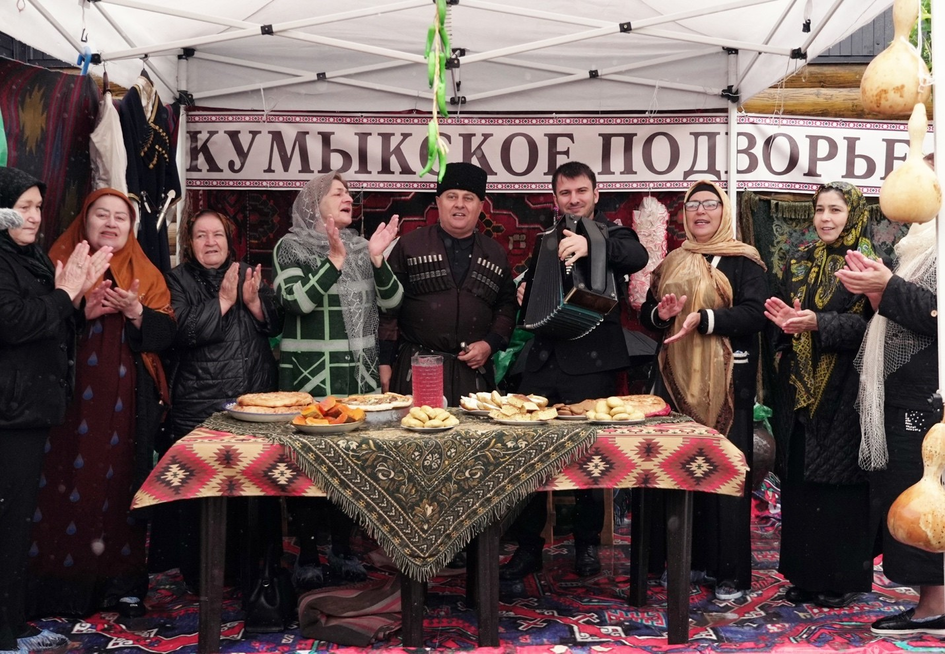
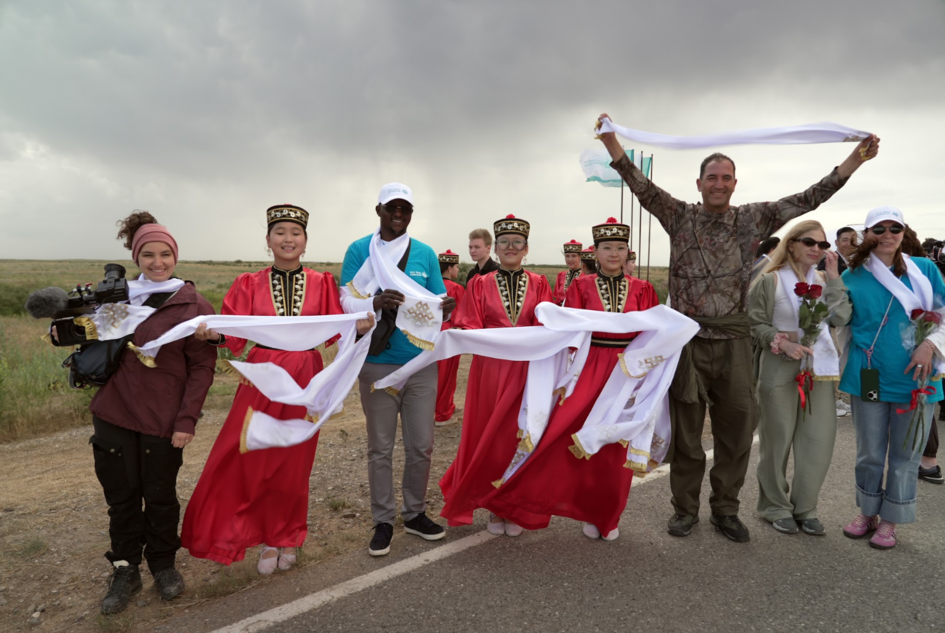
The Caravan receives a very special welcome in Dagestan
For centuries in Dagestan, a traveler arriving from another mountain village brought news, stories and knowledge from beyond the valley, and left carrying new knowledge in return. Such a guest – a kunak – was not merely received; he entered into a relationship of trust and mutual support. That spirit shaped the Caravan’s visit: participants were invited not only to observe, but to trade knowledge and views.
In Buynaksky district, the Caravan participants visited one of Dagestan’s major breeding farms with more than a thousand Kalmyk cows -- demonstrating that this hardy steppe breed can adapt to mountain conditions, including seasonal movement to pastures at 1,500–2,000 meters altitude. Its development shows a practical route for pastoral farming: breeding animals adapted to local conditions, moving beyond raw production, processing food locally, and strengthening regional food security.
Another example of rural initiative was Peach Island, a family business that hasplanted thousands of fruit trees on the island, including peaches, apricots, apples, cherries, sweet cherries, figs, hazelnuts and grapevines. The project reflects a different side of Dagestan’s agricultural potential: family entrepreneurship, horticulture and the ability to turn cultivated land into a place of production, hospitality and local identity.
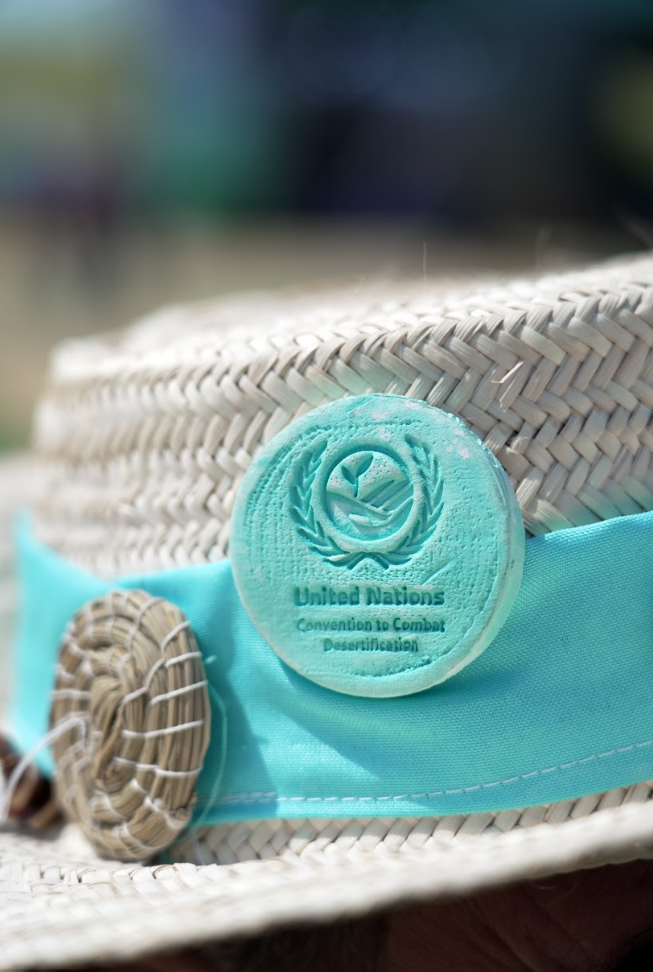
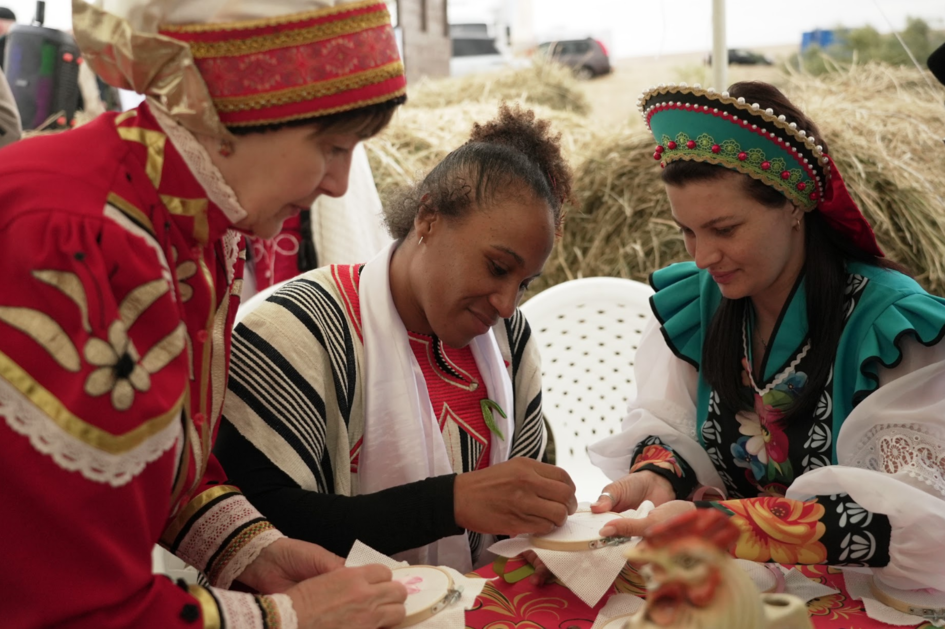
The Silk Road Caravan participant, pastoralist and artist Adnen Hlali commemorated the journey with ornamental hat bearing the UNCCD logo
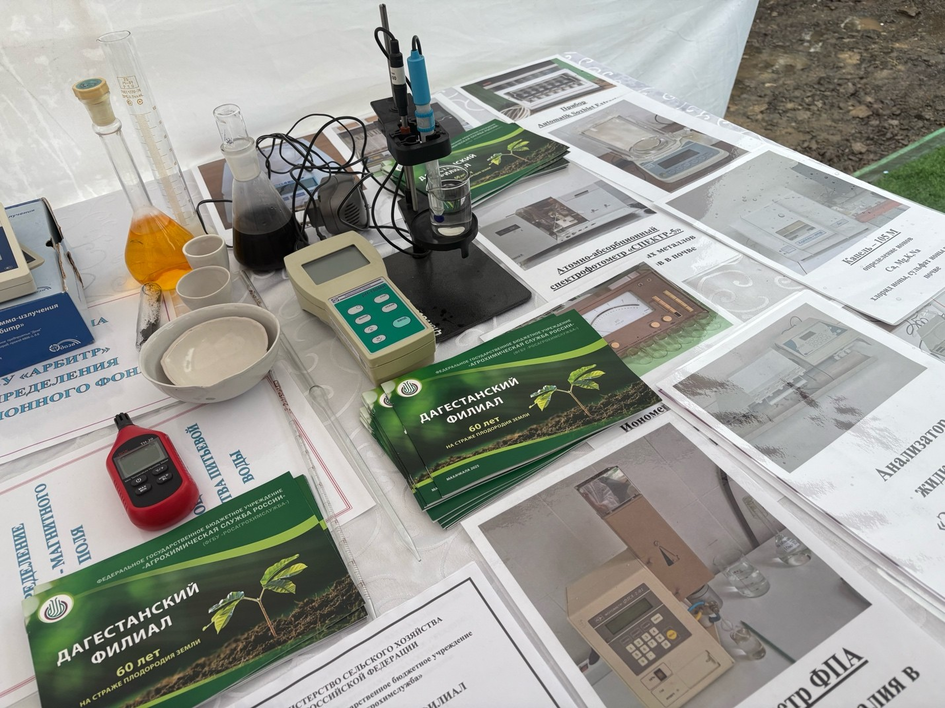
Dagestan also brought the Caravan into the technical infrastructure that farmers rely on but the public rarely sees. Head of the Dagestan branch of the Russian State Agrochemical Service, Shamil Aliyev presented annual land surveys, soil analysis, water testing, fertilizer checks, fodder quality assessment, vineyard and orchard support, and land improvement projects. In 2026, the branch plans to survey 42,000 hectares in Dagestan.
For a republic with nearly a million cattle and around five million small ruminants, fodder quality is central to livestock farming. It affects animal health, productivity and the decisions farmers make about pasture, feed and investment.
The Russian State Agrochemical Service presents its work
Ministry of Agriculture official Vyacheslav Leonov spoke about measures tailored to small farmers and family farms. The support is practical: grants for people who want to start or expand agricultural businesses, including livestock farms, cheesemaking, winemaking and rural tourism. The “agro-startup” grant helps farmers launch an enterprise; successful farms may later apply for larger family-farm grants, provided the business continues to operate and create rural employment. The state does not take ownership, Leonov emphasized. The purpose is to help people who want to work on the land finance a viable plan and remain there for the long term.
Kalmykia: holding the line against advancing sands
From Dagestan, the Caravan moved into Kalmykia, one of Russia’s driest and most desertified regions. In the Black Lands, annual rainfall can be as low as 150–200 millimeters. Pastures stretch across millions of hectares, but shifting sands and desertification remain daily challenges. — a reminder of the growing pressures facing drylands worldwide as climate change and land degradation intensify.
Silk Road Caravan arrives in Kalmykia
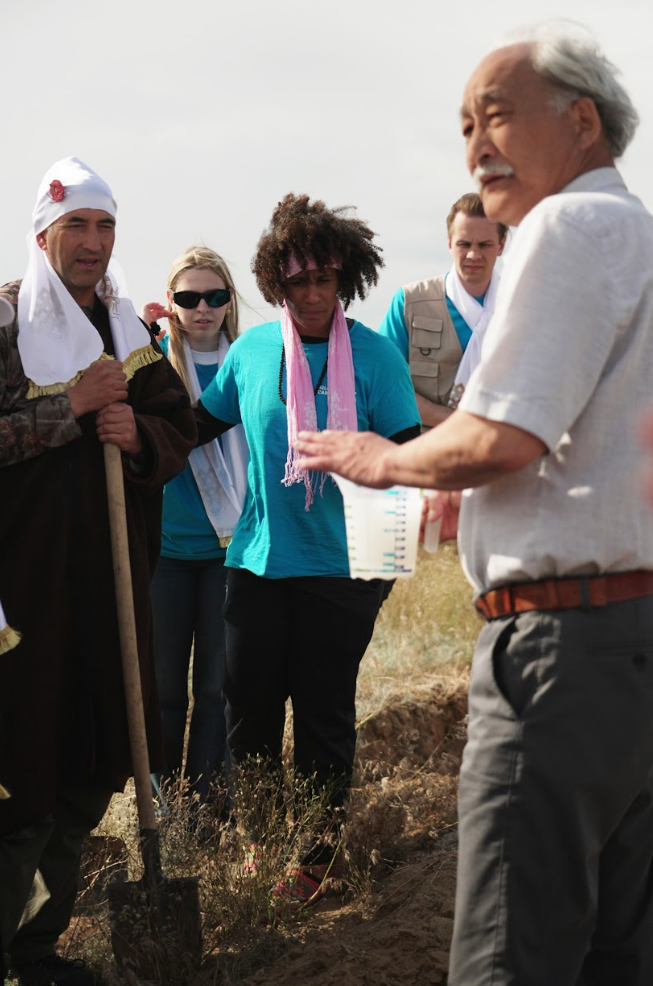
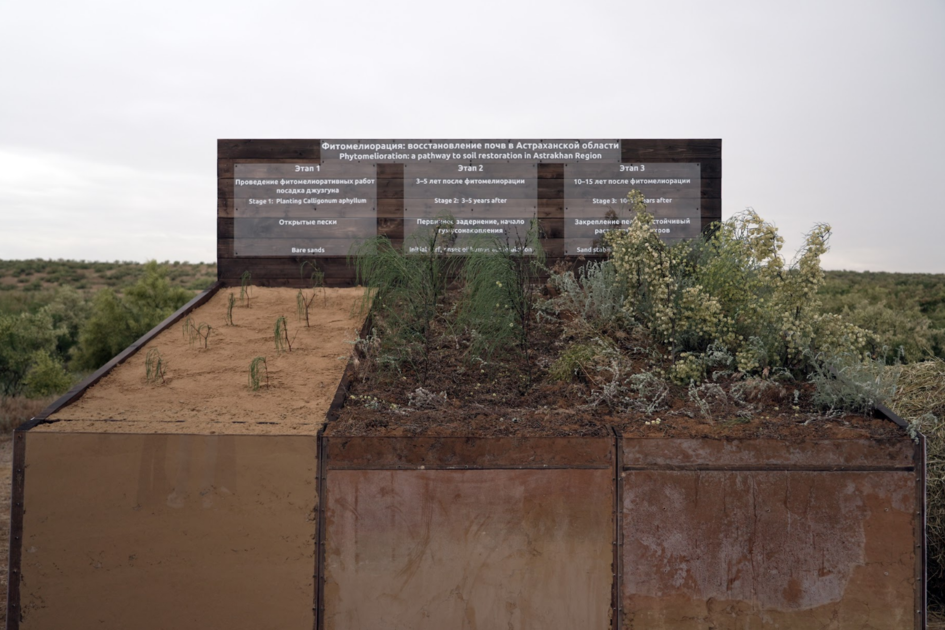
Here, researchers demonstrated how dzhuzgun (also known as Calligonum) is used in land restoration to fix moving sands. Near Artezian, dzhuzgun planted in 2020 and 2024 significantly slowed sand movement and helped stabilize the soil.
With survival rates of around 95–96 per cent, dzhuzgun has a high potential to slow wind erosion and create shelter for other plants. Over time, vegetation can return between the rows, including fodder plants for livestock. What begins as sand fixation can become the first step in bringing degraded pasture back into full agricultural use.
Field stand demonstrating land restoration with dzhuzgun
To advance the dzhuzgun restoration, mobile research units travel across desertified areas to assess degradation, prepare restoration plans and provide scientific monitoring to make sure land is responding. Students at Kalmyk State University take part in this work, learning restoration first-hand right in the field.
When Caravan participant Jacob Lekaitogo, a pastoralist and youth activist from Kenya, planted a dzhuzgun seedling during a welcome ceremony, the gesture seemed modest: one plant, one patch of sand, one pair of hands. But it spoke directly to the purpose of the journey. “The community knows best what’s the best solution for its ailments,” Lekaitogo said. In Kalmykia, the Caravan joined work already underway, learning from local practice how solutions tested in one dryland landscape might inspire action in another.
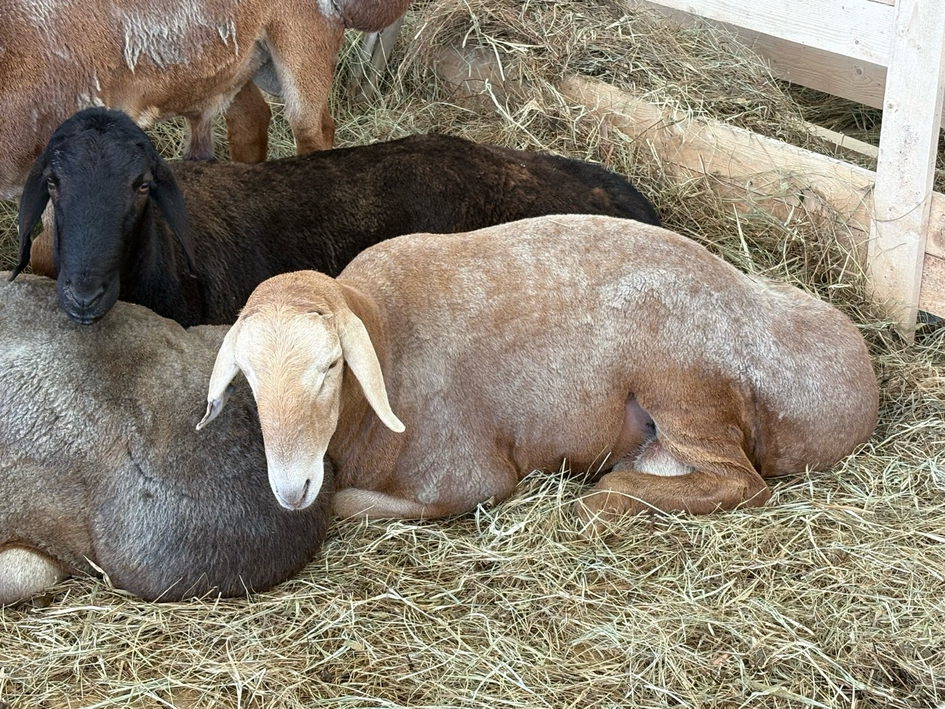
Breeds presented at the 26th Russian Livestock Expo in Elista
The Livestock Expo in Kalmyk capital Elista became another important platform for knowledge exchange. Researchers, state officials, practitioners, students and Caravan participants compared approaches to desertification, pasture management and rural development. Findings presented at the roundtable on combating desertification and land degradation in Russia will also inform events at UNCCD COP17 in Ulaanbaatar this August.
Astrakhan region: when restored pasture sustains the future
In the Astrakhan region near the Caspian Sea, the Caravan entered a landscape where pastureland is not merely an economic resource. It is where generations live, work the land, raise animals and build their future.
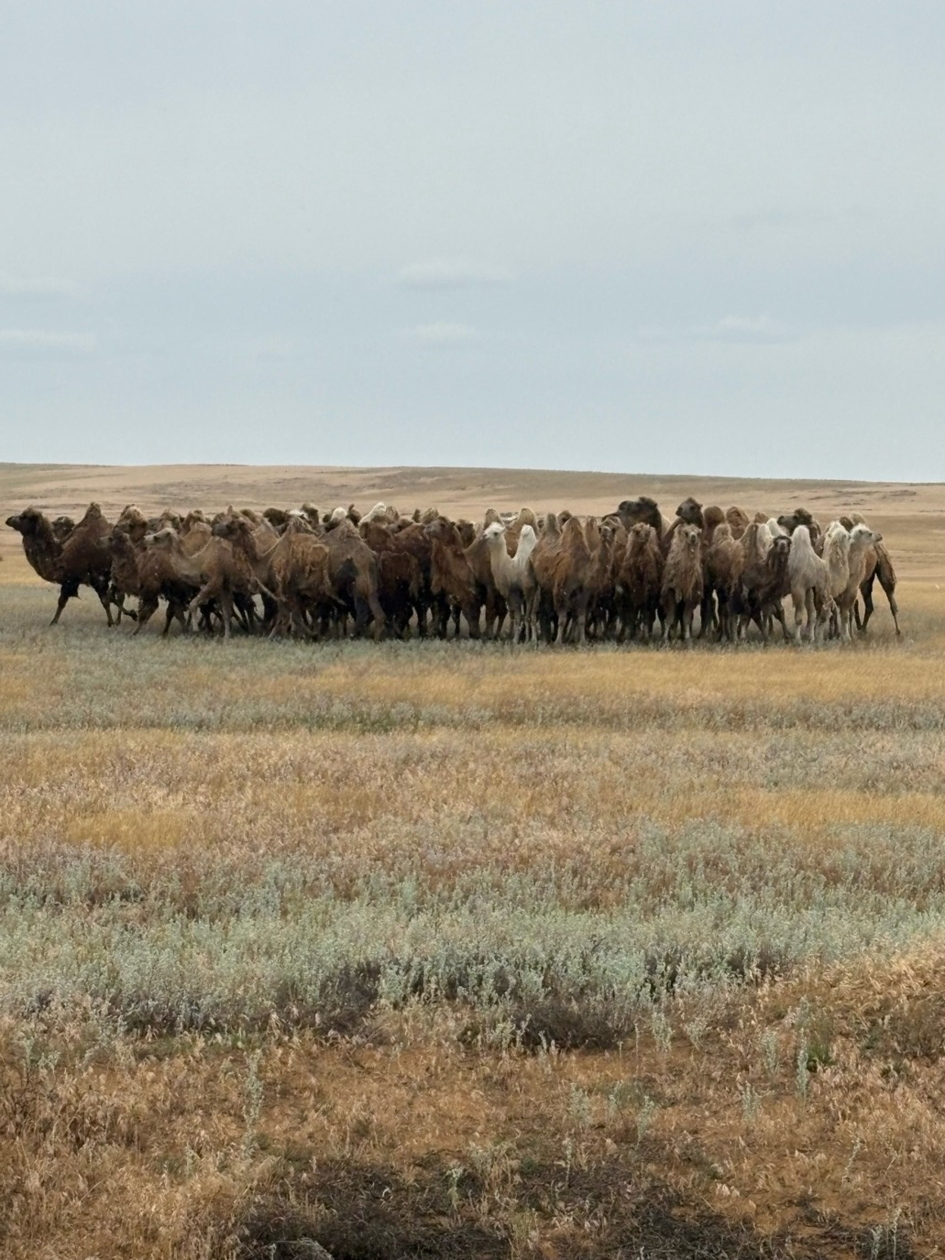
A camel herd roaming free on the Caspian plains
Across the Astrakhan region, pastureland remains closely tied to rural life. Andrey Timofeev, First Deputy Minister of Agriculture and Fisheries of Astrakhan region, described these lands as the everyday workplace and home of rural communities, where people raise animals and sustain local food production. In areas where moving sands once left little room for grazing, dzhuzgun restoration has helped bring land back into use: grasses and fodder plants return, livestock can graze again and farming families have a stronger reason to remain on the land. Without that work, he warned, pasturelands risk being abandoned to wind erosion and desertification.
The knowledge and experiences gathered along the Caravan route will also contribute to discussions at UNCCD COP17 in Mongolia, where governments, scientists, pastoralists and land managers will exchange practical solutions for restoring land, strengthening drought resilience and safeguarding rangelands.
A road ahead to carry seeds of knowledge
The Caravan’s route through southern Russia showed restoration as a chain of work and responsibility: farmers breeding animals suited to harsh conditions; laboratories testing soil, water and fodder; scientists fixing sands shrub by shrub; students learning in the field; entrepreneurs shaping rural start-up businesses; communities holding knowledge that no satellite map can replace.
Among the Caravan crew was Asmaa Niang, UNCCD Sport4Land champion for combating desertification. A Moroccan judoka, two-time Olympian and six-time African Champion, she brought to the journey the spirit of endurance, the discipline of elite sport and the conviction that the fight for land restoration also calls for strategy, resilience and resolve.
The Astrakhan Region welcomes Asmaa Niang
The journey also brought forward the importance of preserving traditional knowledge. Kuluipa Akmatova, a Caravan participant from Kyrgyzstan, spoke about ways culture depends on living environments. When a horse breed, an endemic plant or a highland pasture disappears, the centuries-old knowledge connected to it can disappear too.
Traditional knowledge, she argues, must be recorded, taught and applied — not preserved as folklore alone. If young people are to inherit these landscapes, they need to acquire practical ways to use old knowledge in new conditions.
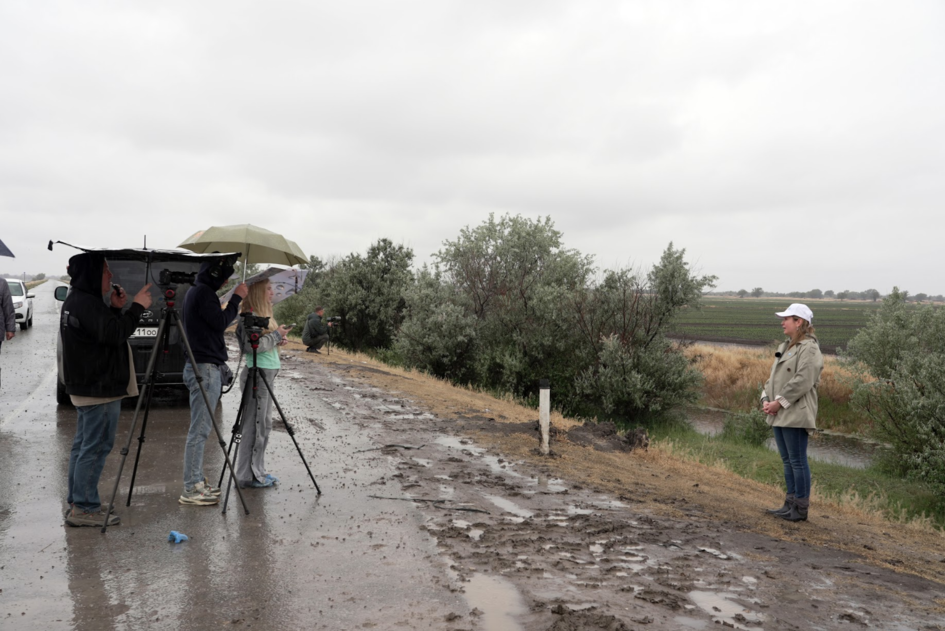
While the weather was not always cooperating, the Caravan team was ready to meet the media come rain or shine
As the Caravan moved on, carrying saddlebags full of stories and wisdom, the image of dzhuzgun remained true: a made-for-desert seed crossing the shifting sands, staying afloat until it gets a hold on the ground, an anchor for what needs to grow next. Knowledge travels in much the same way: it can move far, and when it finds the right place, it will take root and bear fruit.
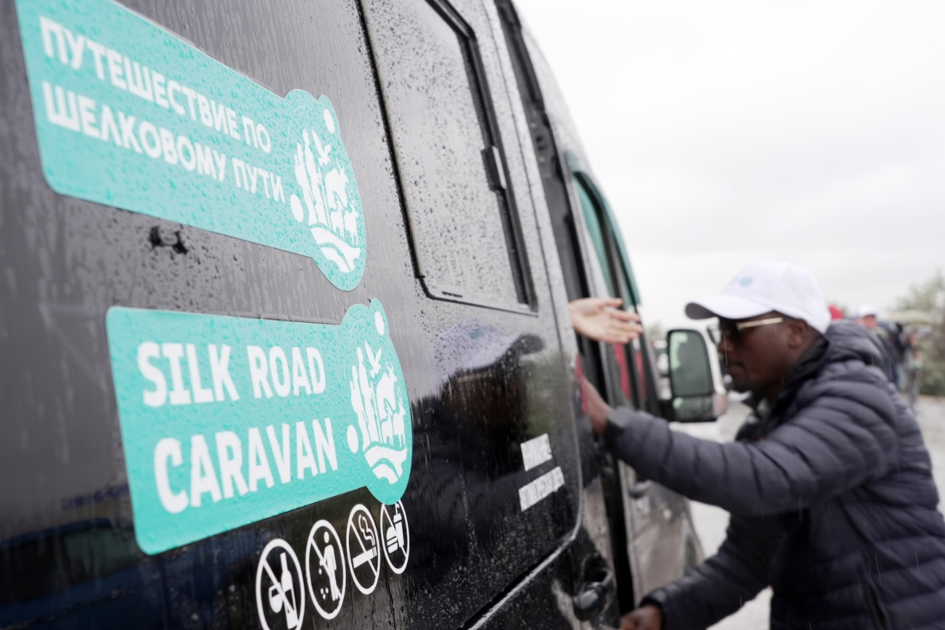
Jacob Lekaitogo gets onboard as the Caravan moves on