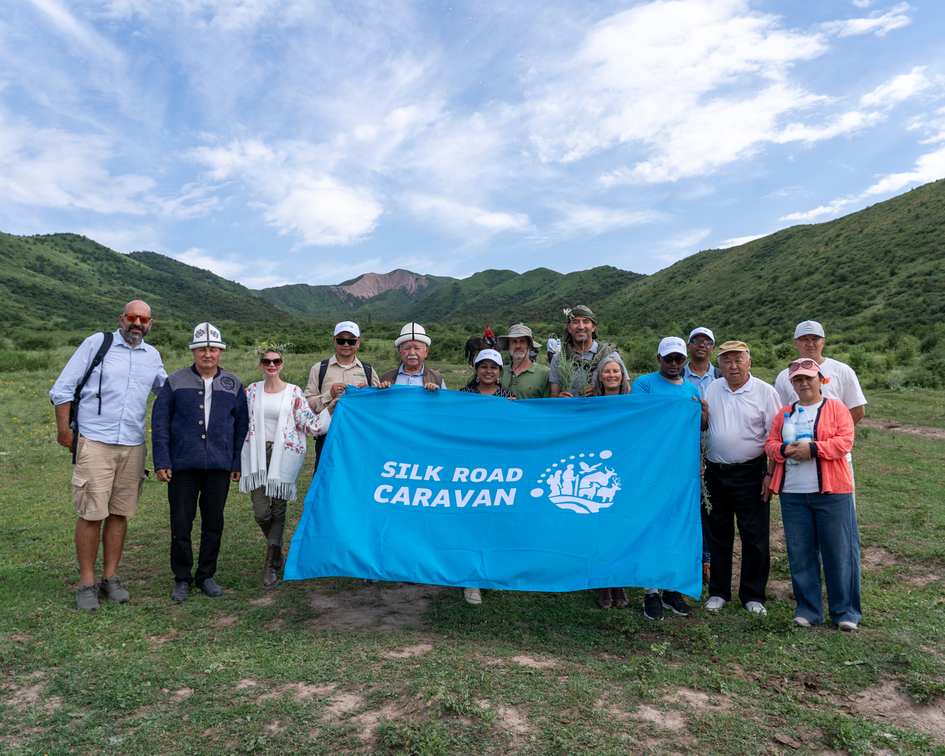
In June 2026, Kyrgyzstan — a country shaped by mountains, mobility and pastoral tradition—welcomed the Silk Road Caravan and offered a glimpse of what a viable pastoral future might look like: young people with a voice in land decisions, innovative water solutions that protect rangeland resilience and biodiversity, pastoralists at the policy table and women-led enterprises turning local skills and products into income and opportunity.
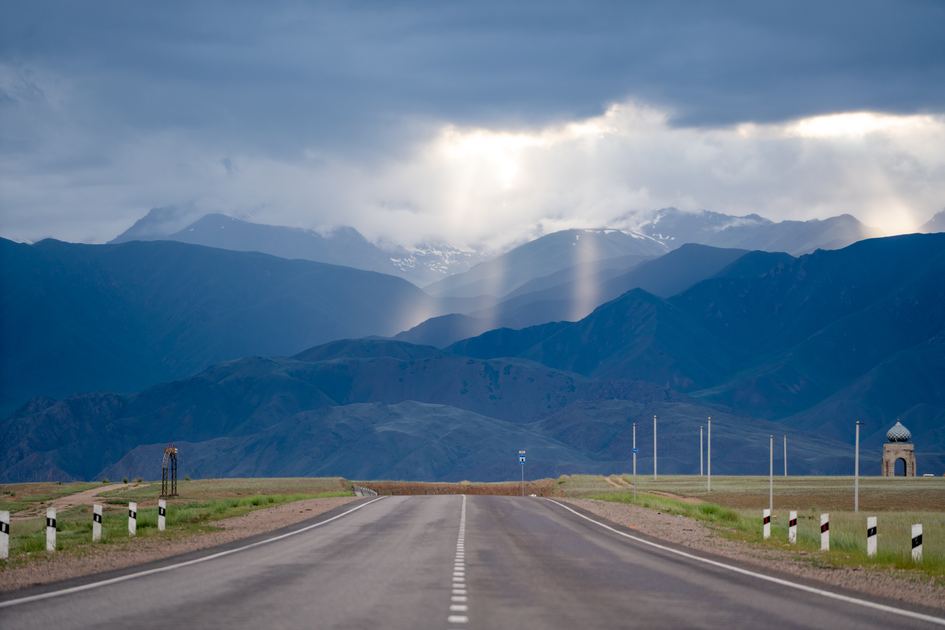
With the Rural Development Fund as its national partner, the Caravan travelled from Bishkek to Chui Region and Lake Issyk-Kul to learn how the nation is keeping its pastures productive, rural livelihoods viable and pastoral knowledge alive. Kyrgyzstan’s pastures cover more than 10 million hectares, providing the main feed base for livestock, which accounts for nearly 49 per cent of gross agricultural output, compared with about 47 per cent from crop production. The rangelands’ future is inseparable from rural development, food security and the nomadic traditions that shape the nation’s identity. This places rangeland condition and governance at the center of Kyrgyzstan’s efforts to advance land degradation neutrality, drought resilience and biodiversity conservation.
“For us, pastures are not only a natural resource but a national asset, supporting the well-being of millions of citizens and preserving centuries-old traditions of nomadic civilization,” Deputy Minister of Water Resources, Agriculture and Processing Industry Rustam Baltabaev said as he welcomed the Caravan.
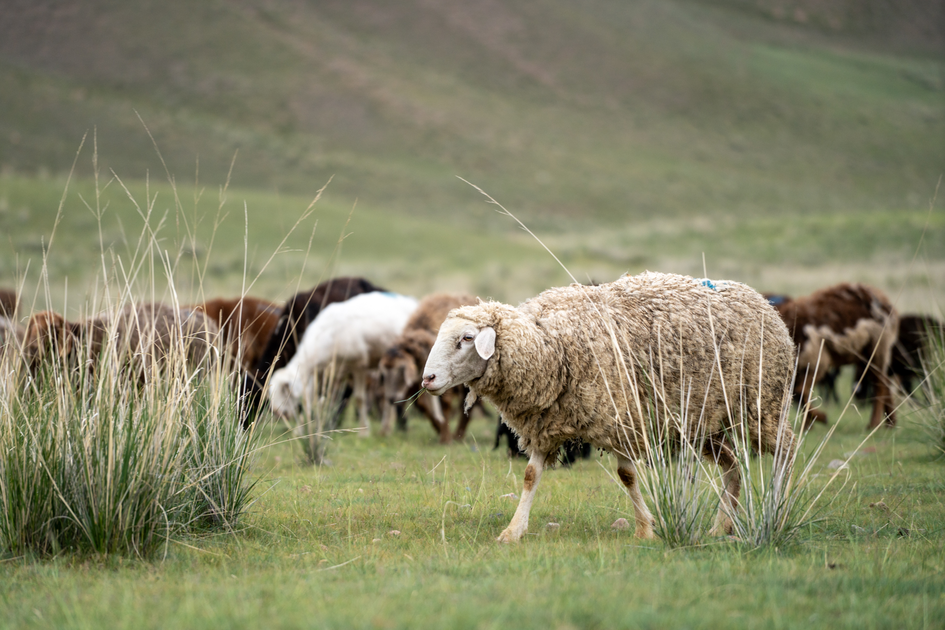
A welcome led by a young generation
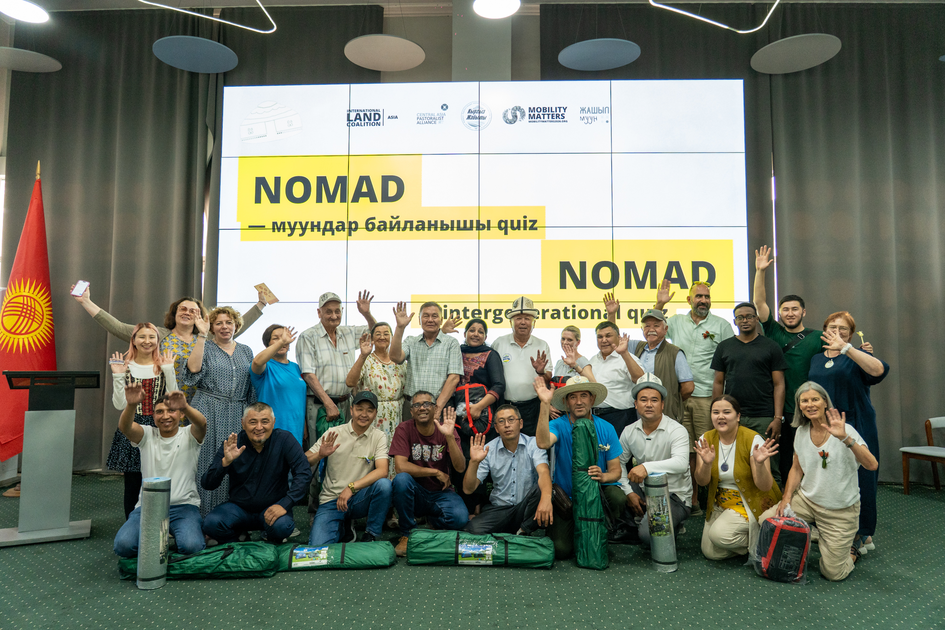
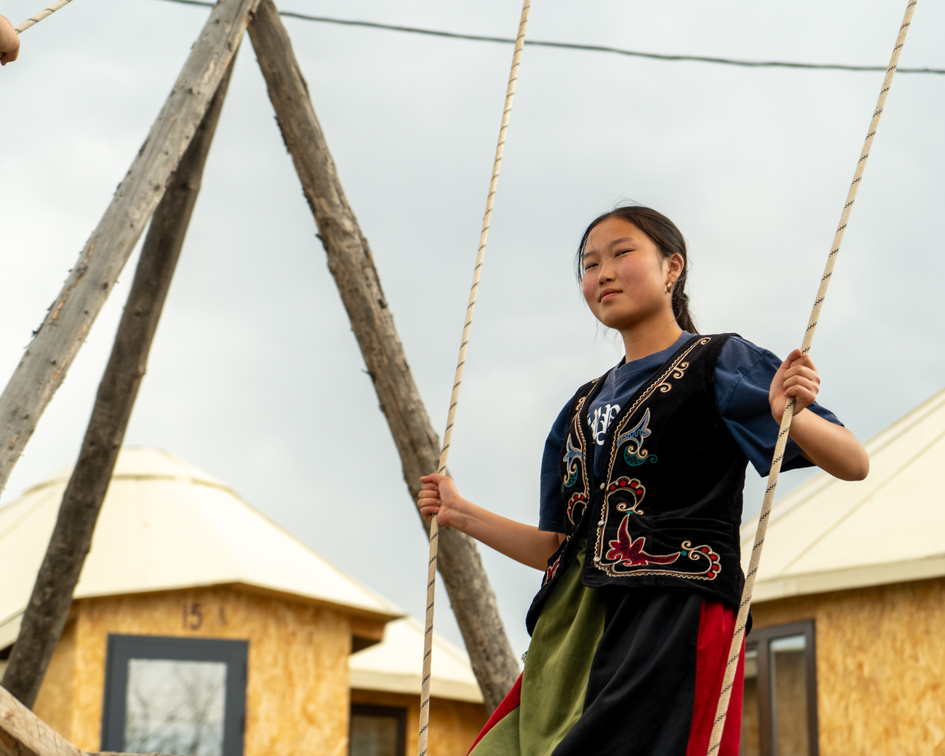
At Bishkek’s Innovation Centre, young activists from the Central Asian Pastoralist Alliance welcomed the Caravan with and intergenerational quiz. Elders, young pastoralists and international visitors joined mixed teams to test their knowledge of pastoral traditions, nomadic life and the realities of managing rangelands today.
Across three rounds, teams raced to identify animal tracks and objects carried during seasonal migration, then matched GPS and drones to pasture-management tasks. Questions on mobility rights and the barriers facing young pastoralists drew partly on UNCCD resources, including the Global Land Outlook thematic report on rangelands and pastoralists. Phones were off-limits; answers had to be worked out together. Traditional music and the Kara-Jorgo dance kept the energy high between rounds, while the winners left with “Nomadic Starter Packs.”
The gathering was lively, but the question underneath the game was serious: what would make a pastoral future worth choosing? Many rural young people migrate to cities or abroad in search of opportunities. Those who stay may lack access to land, relevant training or a place in pasture governance, with additional barriers for young women.
Teams considered what could change that: start-up finance, digital tools, agritourism, cooperatives, membership in pasture-user groups and mentoring by experienced herders. Elders brought knowledge of animals, weather and movement across the landscape; younger participants brought technology and business ideas. What impressed many Caravan participants was that young people had designed and led the programme themselves, proving they were ready to take the lead caring for the land that has sustained generations. The exchange also demonstrated the value of combining intergenerational knowledge with digital tools and formal participation in pasture governance—an important foundation for evidence-informed and socially inclusive land policy.
A man-made glacier for the summer jailoo
At Korgondu pasture near Syn-Tash, the Caravan saw winter water stored in a striking new form: an artificial glacier built by the community to protect the high summer jailoo.
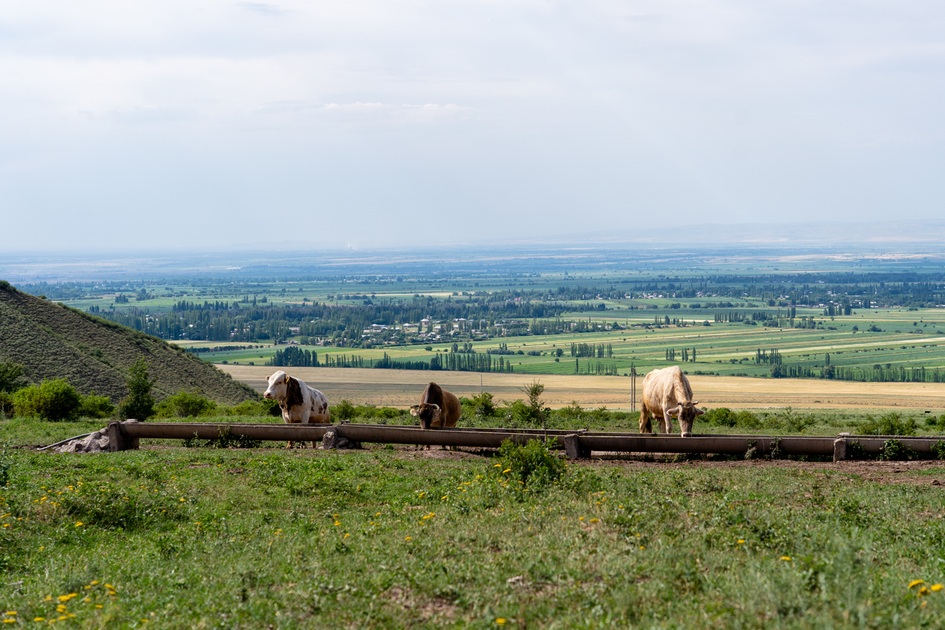
A 2.85-kilometre pipe carries spring water to an 11-metre structure, where it freezes into ice more than six meters high. As the ice melts in spring and early summer, it feeds watering points at lower elevations. Herds can remain here until mid-summer, easing grazing pressure at a crucial point in the growing cycle and giving native pasture plants time to flower and set seed.
The remaining water fills a 30-cubic-metre reservoir that can irrigate more than four hectares, including newly planted nut trees. Medicinal herbs are planned between the rows. For local families, whose main income comes from milk, the system is as important to household earnings as it is to pasture recovery. The example also points to the importance of documenting hydrological and ecological outcomes over time, so that locally effective innovations can be assessed, adapted and, where appropriate, scaled with suitable safeguards.
A ministry dialogue shaped by pastoral experience
On 17 June, the Caravan marked Desertification and Drought Day at a high-level dialogue organized by the Rural Development Fund and hosted by the Ministry of Water Resources, Agriculture and Processing Industry under the theme “Rangelands: Recognize. Respect. Restore.”
Government representatives joined alongside the UNCCD Secretariat, International Land Coalition, UNDP, FAO and the National Land Coalition. For the pastoralists travelling with the Caravan, it was a chance to place their own experience alongside Kyrgyzstan’s.
Mohamed Adnani Hlali of Bergers de Semmama and the Green IYRP Initiative in Tunisia spoke of desertification driving rural exodus and the loss of pastoral identity. Bhavnaben Desai of the Global Alliance for Rangelands and Pastoralists in India described women-led committees that map land, sow native grasses and work with local authorities on common-land governance. Their work has improved pasture access for more than 1,200 families while bringing women into restoration decisions.
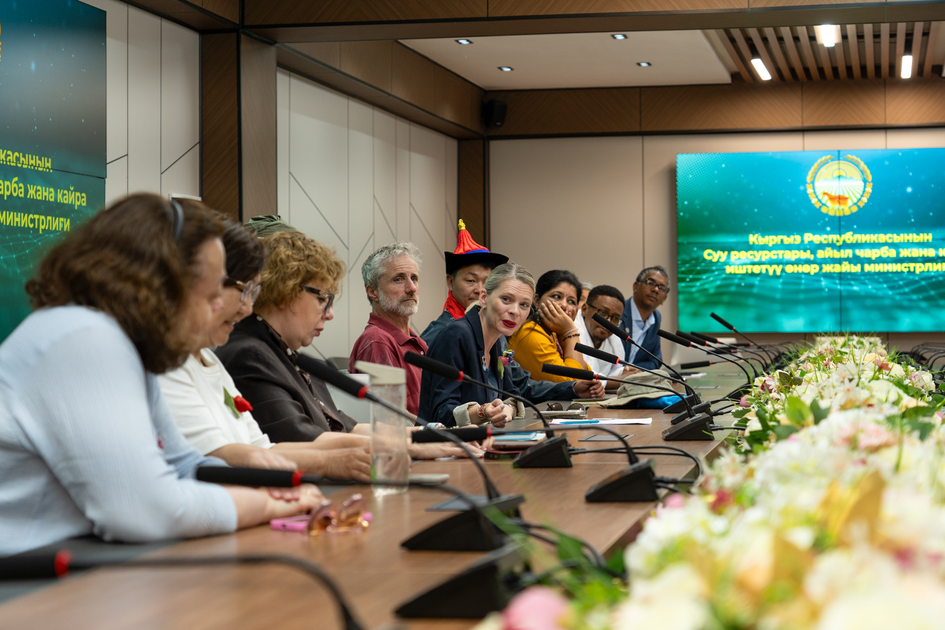
During a later discussion on community conservation, Mogamat Igshaan Samuels of the Global Alliance for Rangelands and Pastoralists in South Africa challenged approaches that separate nature from the people who have managed it for generations. “These ecosystems have evolved with pastoralists in them over centuries,” he said. “We need to set our targets differently.”
Ahmednoor Saleh Mohamud of the My Land is My Life Coalition in Somalia recalled six rainy seasons failing in succession between 2020 and 2025. Mobility, he said, was the most effective adaptation available: “The families who kept moving survived.” His organization now supports young people to document the practices that helped pastoralists endure drought.
“Although we are thousands of kilometers apart, we share the same problems as pastoralists” was the shared sentiment, bringing the conversation again and again to the same practical needs: supporting mobility as a climate adaptation, involving women and communities in land decisions, using scarce water wisely and sharing local practices that work. The dialogue closed with recommendations on rangeland restoration and sustainable pasture management. Their implementation will depend on clear institutional responsibilities, sustained participation and monitoring of both ecological and livelihood outcomes.
Wool, work and welcome by the shores of Issyk-Kul
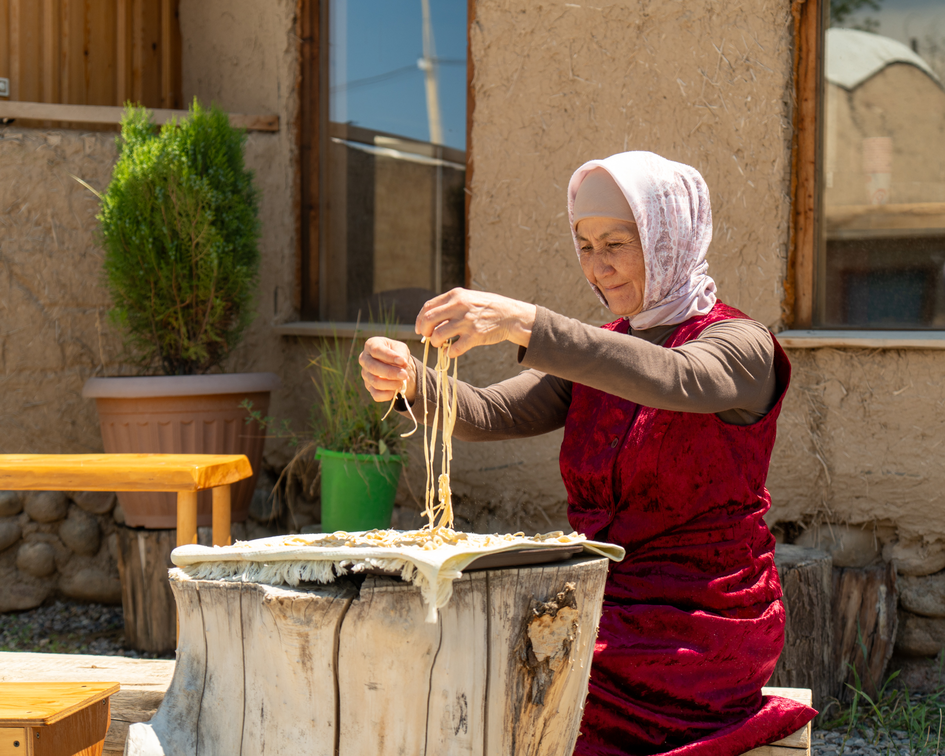
Near Lake Issyk-Kul, the Caravan spent several days at a women-led ethnocultural complex founded by Zhanyl Baisheva in Bokonbaevo. What began as a small felt workshop three decades ago has grown into a sustainable enterprise with a production studio, education center and yurt camp.
The association works with dozens of women from nearby villages, offering part-time income and training for younger artisans. Local wool is shaped through traditional felt appliqué and contemporary design, with some pigments drawn from plants. Its work has travelled to international exhibitions and received the UNESCO Seal of Excellence for Handicrafts in 2014.
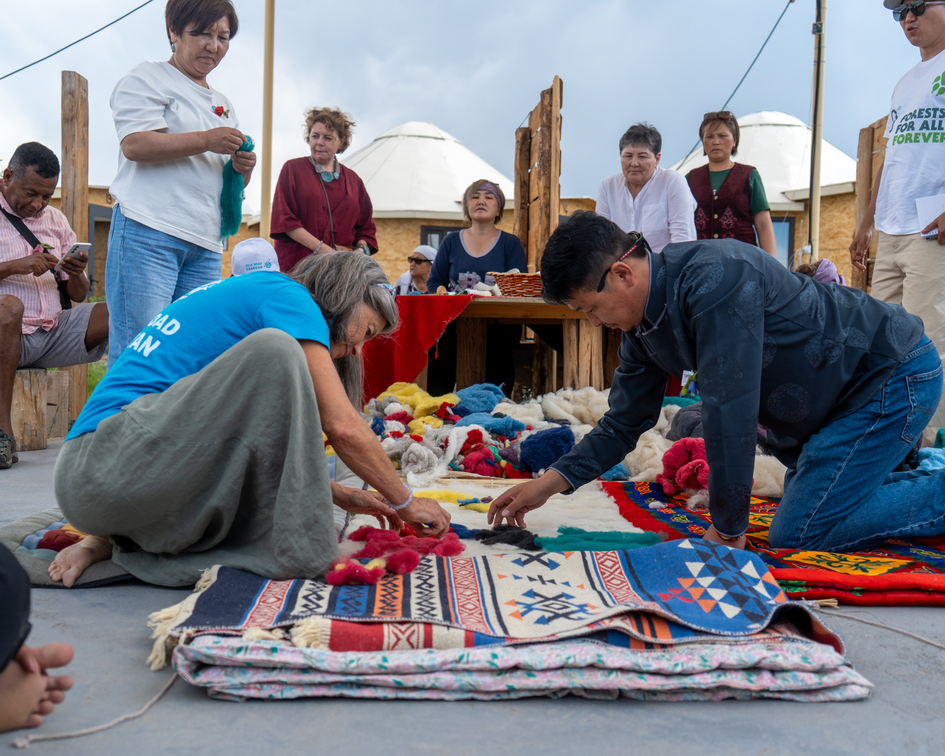
Following the days filled with field trips and discussions, Caravan participants created a commemorative felt carpet under the guidance of local artisans. In the shared yurt, the local artists did not simply demonstrate their craft – they invited their guests to work alongside them, turning local wool into a shared record of the journey. Signed by everyone who took part, the carpet now hangs at the UNCCD Secretariat in Bonn — a lasting reminder of the warmth with which the Caravan was received in Kyrgyzstan.
Onwards to COP17
Kyrgyzstan concluded the Caravan’s passage through Central Asia, with each country presenting its distinctive strengths. Uzbekistan brought experience in managing salinity on irrigated lands and restoring arid landscapes alongside Green University’s investment in a new generation of environmental specialists. Kazakhstan demonstrated decades of soil data put to work through increasingly digitized monitoring. Kyrgyzstan added community-led pasture restoration, water innovations and women-led enterprises that turn pastoral products into sustainable income.
All along the way, the UNCCD team invited practitioners to share these field-tested solutions on the UNCCD knowledge platforms and showcase them at COP17. Sharing these experiences with the Conference of the UNCCD Parties can help move the discussion from individual projects toward policy-relevant evidence on what works, under which ecological and institutional conditions, and how successful approaches can be sustained or scaled.
Kuluipa Akmatova, Director of the Rural Development Fund, traced her belief in the Caravan's mission to the family history — her grandfather once travelled by camel along the Silk Road as far as Kashgar, a historic trading post in western China. “He used to say that all along the way there were people just like us, and in the end, we all want the same simple things: clean water, fresh air, enough food and our families safe.”
She wished the Caravan’s kurjun (travelling chest) would continue to fill with knowledge and wisdom as it turned eastward toward China and Mongolia, carrying with it the warmth of the nomadic welcome.